

Blog
Can Doxycycline Make You Tired? The Surprising Science Behind Antibiotic Fatigue

Jul
Can doxycycline cause you to feel tired? This is one of the most commonly asked questions about the medication, though one of the least well-addressed, if you’re halfway through a course and suddenly feeling tired in a way that’s different from how you usually feel. Most references confirm the existence of doxycycline-induced fatigue and leave it here. A more useful response explains the reasons why it happened, because the root cause determines the options available to you.
Here is a thorough look at doxycycline fatigue: four processes that can work independently or at the same time, ways to figure out which is the main one in your case, and what research has found about each.
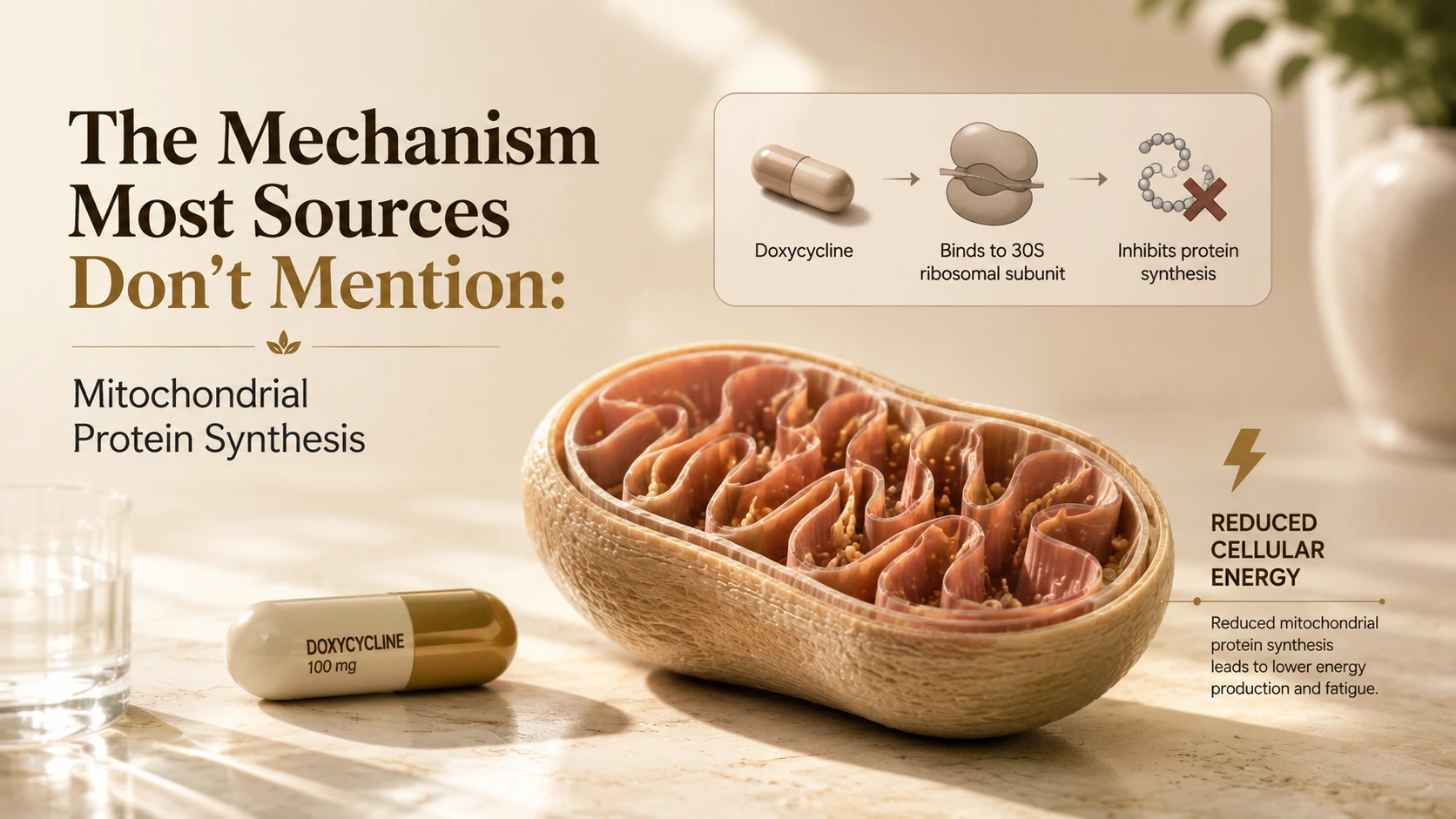
The Mechanism Most Sources Don’t Mention: Mitochondrial Protein Synthesis
This is the most pharmacologically accurate explanation of doxycycline-caused fatigue rarely covered in patient-facing literature.
Doxycycline binds to the 30S component of the bacterial ribosome, blocking the bacteria’s ability to produce the proteins it needs to replicate and survive. This is a well-known mechanism of antibiotics. It is less often appreciated that mitochondria, the energy-producing organelles of human cells, are evolutionary descendants of bacteria and have a ribosomal structure similar to that of the bacterial ribosome inhibited by doxycycline.
A study published in Current Biology and cited across multiple PMC-accessible reviews (PMC: Tetracyclines Disturb Mitochondrial Function across Eukaryotic Models) found that doxycycline causes mitonuclear protein imbalance, reduced cellular respiration, and markedly impaired mitochondrial activity across multiple eukaryotic cell models. The inhibition of mitochondrial protein synthesis was accompanied by a strong decrease in oxygen consumption, the cellular process by which mitochondria convert nutrients into usable energy. Critically, this mitochondrial effect was shown to be reversible when doxycycline was removed from the medium.
A 2021 paper in the International Journal of Molecular Sciences (PMC: The Antibiotic Doxycycline Impairs Cardiac Mitochondrial and Contractile Function) specifically documented that doxycycline reduces oxidative phosphorylation and impairs mitochondrial protein synthesis in multiple animal models, while acknowledging that long-term clinical use at antibiotic doses has not produced significant overt clinical toxicity in most patients.
In practice, the weariness related to doxycycline is related to the drug’s ability to pharmacologically reduce cellular energy generation through this mitochondrial pathway. At standard therapeutic doses (100 to 200mg per day during a standard antibiotic treatment), this effect is very mild compared to the doses used in research models, but it gives a real biological basis for the fatigue that patients experience with doxycycline. Crucially, the study demonstrates that this effect is reversible, implying that the weariness caused by doxycycline via this mechanism should dissipate following the conclusion of treatment.
The Doxycycline Fatigue That Is Actually Infection Fatigue
This is the most commonly overlooked factor and by far the most important one to grasp. A large proportion of the fatigue that patients attribute to doxycycline during antibiotic treatment is not due to the doxycycline itself. Doxycycline is an immunological response from the body to the illness it is treating.
In the middle of an ongoing war against a bacterial infection, the immune system uses a large amount of metabolic energy on inflammatory signalling, the production of white blood cells, and tissue repair. The release of pro-inflammatory cytokines during this response directly impacts the central nervous system, leading to symptoms such as fatigue, decreased motivation, and impaired cognitive function. What experts call this disease behaviour is an evolutionary response that promotes relaxation when ill, conserving energy for immune activity.
There is a pattern to the fatigue from doxycycline, which is actually fatigue from the infection. It is generally most severe in the first few days of treatment when the infection burden is greatest, and the immune response is most intense. It often improves before the course of doxycycline is complete as the infection clears. This is probably the main mechanism if your fatigue is improving little by little during your treatment.
The thing is, if you blame the doxycycline for all your halfway-through-the-day tiredness, you’re missing the bigger picture: it was the illness that was sucking the life out of you, and the antibiotic is doing a very good job of fixing that.

Gut Microbiome Disruption and Secondary Doxycycline Fatigue
A third distinct contributor to doxycycline fatigue comes from the gut. Doxycycline significantly alters the composition of gut bacteria throughout a course of treatment.
Research on doxycycline’s effects on colonic microbiota, reviewed in PMC-accessible literature (PMC: Profiling the Effects of Systemic Antibiotics for Acne on Human Gut Microbiota), documents significant reductions in Lactobacillaceae and Bacteroidaceae, two bacterial families involved in producing short-chain fatty acids, B vitamins, and other metabolites that influence systemic energy levels and the gut-brain axis. The gut microbiome is increasingly recognised to have a role in systemic energy handling. Disturbance of the gut microbiota by broad-spectrum antibiotics such as doxycycline leads to repercussions beyond gastrointestinal problems.
Weariness due to mitochondrial abnormalities or infection is not the same as weariness due to doxycycline-induced gastrointestinal upset. It can be accompanied by abdominal distension, changes in bowel patterns, or a general sense of lethargy not clearly related to the digestive problems. It may remain even after the course of antibiotics is complete, as the microbiome heals, which is different than the doxycycline fatigue that goes away immediately after the last dose is taken.
For the complete guide to what happens to gut microbiota and other body systems after doxycycline ends, including fungal rebound and microbiome recovery timelines, see the Doxycycline side effects after stopping guide at RxFarmacia.com.
GI Side Effects as a Driver of Doxycycline Fatigue
The fourth mechanism is the easiest. The gastrointestinal side effects of doxycycline are well-known and include nausea, vomiting, diarrhoea and esophageal irritation. Doxycycline-induced fatigue may be indirectly caused by two mechanisms: dehydration and nutritional malabsorption.
Chronic nausea leads to decreased food and fluid intake, resulting in caloric deficit and mild dehydration, both of which can independently contribute to fatigue. Diarrhoea promotes fluid loss and decreases time for nutritional absorption from the intestinal lining, which could result in micronutrient insufficiency in the long term. Prominent gastrointestinal symptoms are common in doxycycline-related weariness via this pathway, and significant improvement may be seen once gastrointestinal side effects are well managed.
Taking doxycycline with a meal that lacks non-dairy products and calcium greatly reduces gastrointestinal side effects, thereby avoiding this indirect path to doxycycline-induced weariness. The very best you can do to combat this specific mechanism of weariness is to stay well hydrated during the course.
Distinguishing the Four Types of Doxycycline Fatigue
What to Do About Doxycycline Fatigue During Your Course
- Take doxycycline with a non-dairy, calcium-free meal to reduce GI side effects, which indirectly reduces GI-related doxycycline fatigue
- Stay well hydrated throughout the course. Doxycycline should always be taken with a full glass of water, and general daily fluid intake should be maintained even if appetite or nausea is reduced
- Moderate physical activity, where your infection allows it, supports energy levels better than complete sedentary rest for most people experiencing doxycycline fatigue from the mitochondrial or gut mechanisms
- Probiotic-containing foods such as yogurt, kefir, and fermented vegetables may support gut microbiome recovery during the course and reduce the gut-disruption component of doxycycline fatigue
- Prioritize sleep quality. Doxycycline fatigue that is partly driven by infection-related immune activity responds well to adequate, consistent sleep during the treatment period
- Avoid adding new stressors, whether dietary, physical, or otherwise, during a doxycycline course if fatigue is already significant

Get Doxycycline 100mg at RxFarmacia.com
RxFarmacia.com carries pharmaceutical-grade doxycycline 100mg in two formulations from verified WHO-GMP certified manufacturers.
View Doxycycline 100mg Doxt-SL at RxFarmacia.com →
View Doxycycline 100mg Doxenorm-LBX at RxFarmacia.com →
For the complete guide on timing doxycycline around dairy and other calcium-containing foods, which affects both GI side effects and the indirect doxycycline fatigue they cause, see the Doxycycline and dairy guide at RxFarmacia.com.

Frequently Asked Questions
Can doxycycline make you tired?
Yes. Doxycycline-induced fatigue is real and frequently reported. It happens through at least four mechanisms. The first is direct inhibition of mitochondrial protein synthesis and thereby decreased energy production in cells. The second is the immune response of the organism to the infection being treated. The third is disruption of the gut microbiome that impacts systemic energy regulation. The fourth is gastrointestinal side effects leading to dehydration and nutrient malabsorption. Fatigue from doxycycline is usually mild with normal doses of the antibiotic, and resolves after treatment is completed.
Does doxycycline make everyone tired?
Not everyone experiences significant fatigue from doxycycline. The degree of weariness you experience on a course of doxycycline will depend on several mitochondrial responses, severity of the infection being treated, and severity of the GI side effects. Patients with illnesses that provoke strong systemic immune responses may be more likely to have increased fatigue during doxycycline therapy, primarily due to the infection and not the drug.
How long does doxycycline fatigue last?
Doxycycline-induced fatigue by mitochondrial pathways usually resolves within days after stopping doxycycline, with evidence that the effects are reversible with stopping doxycycline. Fatigue associated with infection improves when the infection resolves, often before therapy is complete. Fatigue from doxycycline that is related to the gut microbiome can continue for one to two weeks after the last dose while the microbiome recovers. Fatigue lasting longer than 2 weeks after completion of doxycycline should be evaluated by a health care provider.
Is doxycycline fatigue serious?
Doxycycline-induced fatigue is often minor and self-limiting at standard antibiotic doses, and it resolves spontaneously with cessation of therapy. However, the vital mitochondrial mechanism is real and demonstrated by research, generating subclinical benefits at therapeutic levels for most patients. Profound weariness, fatigue accompanied by cardiovascular symptoms, or fatigue that continues after therapy should be evaluated medically.
Why does doxycycline cause fatigue specifically?
Doxycycline-induced fatigue has a clear pharmacologic basis. Mitochondria are derived from bacteria and have a ribosomal structure similar to that targeted by doxycycline. Thus, the antibiotic can interfere with mitochondrial protein synthesis and reduce cellular respiration. Doxycycline exposure has been shown to reduce mitochondrial oxygen utilisation in a dosage-dependent manner. These are also indirect aspects such as the immune response to the treated infection, the alteration of the gut flora, and gastrointestinal side effects.
The Bottom Line
Doxycycline can cause fatigue. In fact, the reasoning is more particular than what is admitted by many authorities. The pharmacological basis of doxycycline-induced fatigue is known, due to the reduction of mitochondrial protein synthesis and the evolutionary origin of mitochondria and the structural similarity between mitochondrial and bacterial ribosomes. This impact depends on dosage and can be reversed.
At the same time, much of the exhaustion that people experience when taking doxycycline is due to infection fatigue, which is the metabolic price the immune system pays to fight the bacterial infection that the antibiotic is targeting. It is useful to distinguish these two causes of doxycycline-related fatigue, as fatigue of infection will resolve with good therapy and fatigue of the drug will resolve after completion of the course. Both are real, both are temporary, and neither is a reason to stop the medicine before you are supposed to.
