
Blog
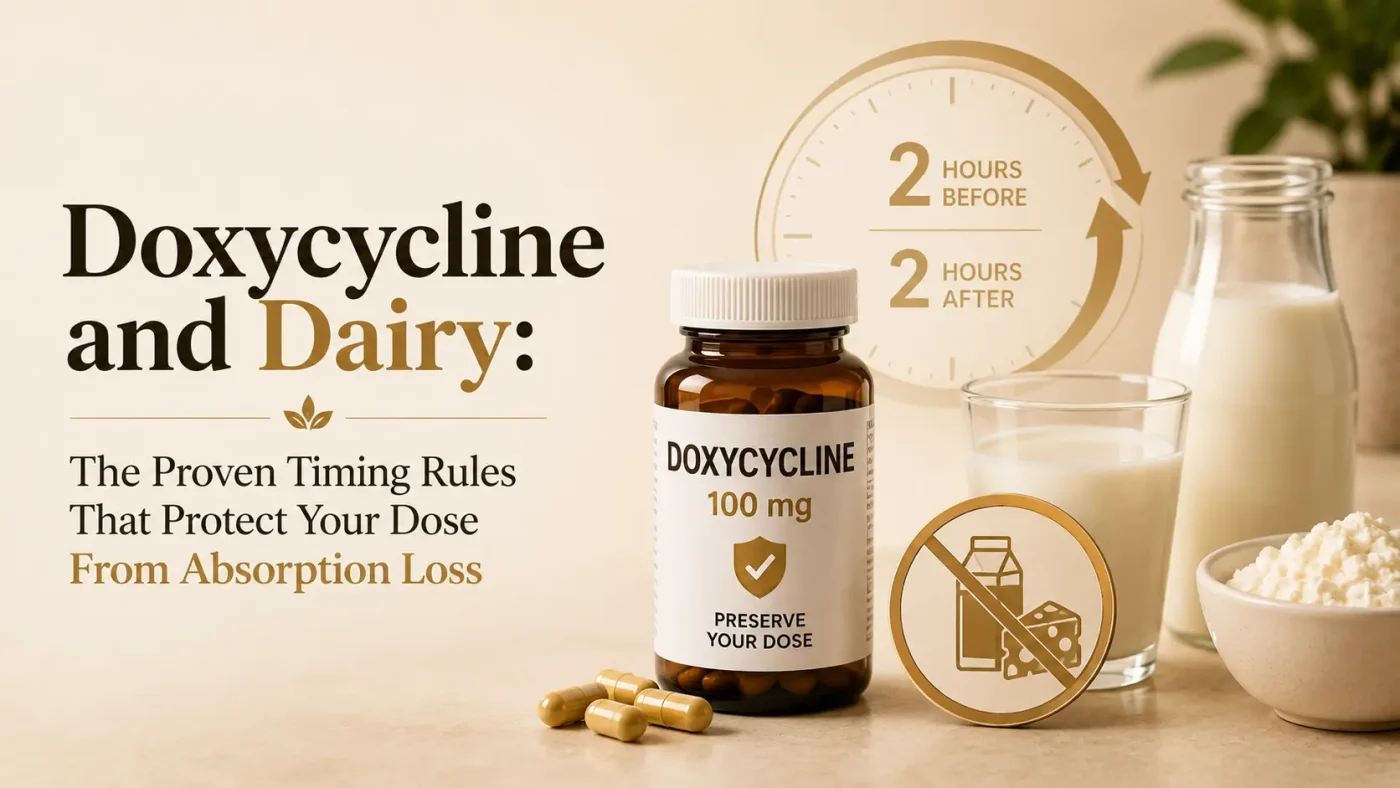
Doxycycline and Dairy: The Proven Timing Rules That Protect Your Dose From Absorption Loss
Jul
The doxycycline and dairy interaction is sometimes presented in an overly simplified recommendation or in a manner that does not match the actual level of danger. Some patients are told to eat nothing while taking doxycycline and experience hunger from gastrointestinal side effects. Some people read the FDA label language about hyclate formulation and conclude that dairy is OK. Both of these beliefs lead to big problems in the efficiency of the medicine.
Here is the complete and accurate guide on doxycycline and dairy interaction: the reasons behind it, how much absorption is impacted, when you can take your medication, and what you can eat with your doses.
Why Doxycycline and Dairy Interact: The Chelation Mechanism
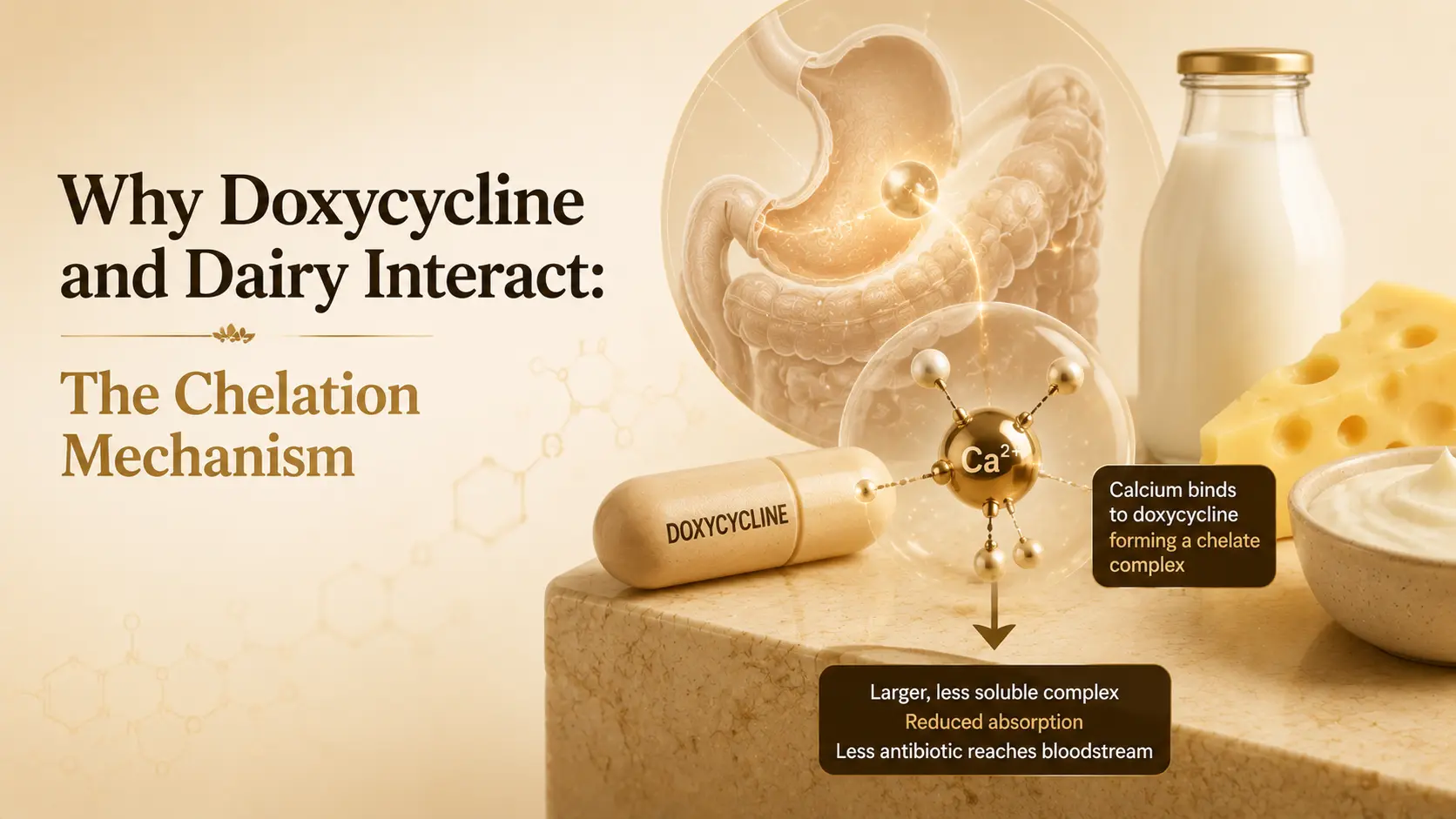
Doxycycline interacts with dairy because of a chemical process called chelation. Doxycycline belongs to the class of antibiotics called tetracyclines, which have a structural characteristic that makes them prone to chelation and can quickly chelate divalent and trivalent metal ions such as calcium, magnesium, iron, and aluminium.
When you take doxycycline with dairy products, the calcium ions in milk, cheese, or yoghurt bind to the doxycycline molecules in the stomach and small intestine. Calcium ions bind immediately to doxycycline to form a chelate complex. This chelate complex is far larger, less soluble, and much more difficult for the intestinal wall to digest than free doxycycline. A large proportion of the dose passes straight through the gastrointestinal tract without ever reaching the bloodstream, where it is needed to fight the infection.
A review of doxycycline’s pharmacology and drug interactions published in StatPearls via the National Library of Medicine (NLM/StatPearls: Doxycycline Hyclate) confirms that divalent or trivalent cations, including calcium from dairy, readily chelate with tetracycline antibiotics, forming insoluble compounds that reduce oral absorption.
How Much Does Dairy Reduce Doxycycline Absorption?
Dairy significantly decreases the absorption of doxycycline. Pharmacokinetic studies examining the actual serum levels of doxycycline following co-administration of dairy products have demonstrated a reduction of 9–53%, with some studies reporting an average decrease of 30%.
A 1989 study examining the effect of milk on doxycycline bioavailability found that absorption decreased by 30% when milk was taken at the same time as the drug. Modern references suggest the spectrum may vary with the amount of dairy consumed, the specific formulation of doxycycline, and individual variances in the length of gastrointestinal transit.
Therapeutic significance of 30% reduction in antibiotic bioavailability. Taking 100mg of doxycycline with dairy can mean just 70mg or less really gets into the bloodstream, with the rest of it passed out useless. For infections where high enough concentrations of the drug are important for the elimination of the pathogen, the difference between the indicated dose and the actual dose provided may have a major impact on the therapeutic outcome.
The whole spectrum of 9 to 53% is likewise vital to know. A 9% drop on a day when an individual takes only a small quantity of milk with sufficient time before dosing is genuinely negligible. A 53% drop in efficacy occurs when doxycycline is ingested concurrently with dairy products that feature a significant calcium content, such as a glass of milk, a dish rich in cheese, or a calcium-enriched beverage, which may endanger treatment.
The FDA Hyclate Label: What It Actually Says and Why It Confuses People
This is the most important clarification in the doxycycline and dairy discussion, and it is one that the available guidance consistently gets wrong or leaves too vague.
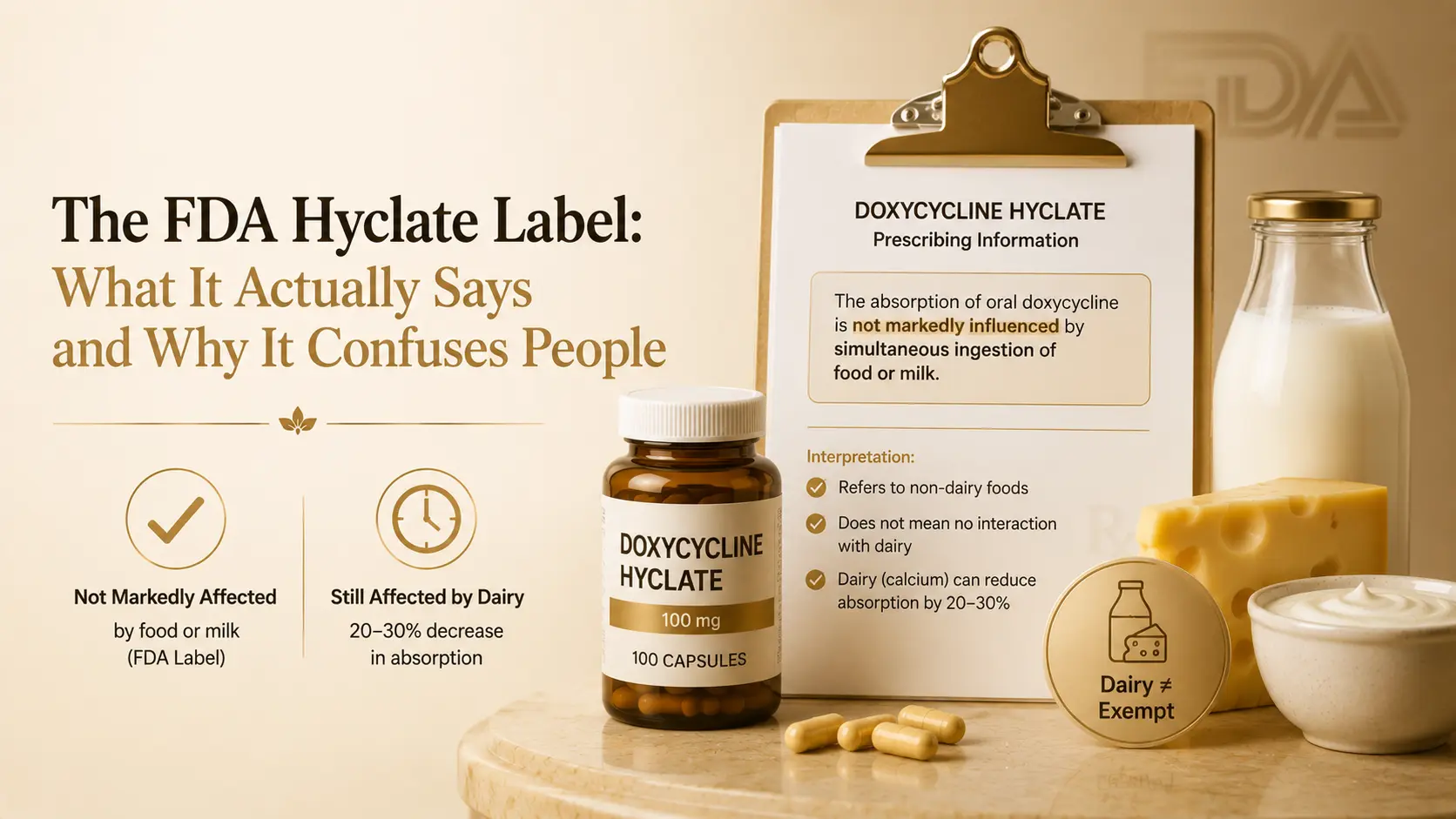
The FDA prescribing information for doxycycline hyclate, accessible via the FDA’s DailyMed database (FDA DailyMed: Doxycycline Hyclate), notes that the absorption of oral doxycycline is not markedly influenced by simultaneous ingestion of food or milk. This sentence has been read by many patients as indicating that taking doxycycline hyclate with dairy is acceptable.
That’s the wrong understanding, and here’s why the phrase exists.
The tetracycline class of antibiotics has a long history of being significantly affected by food in general, not just dairy. Older tetracyclines, such as tetracycline, should be taken on an empty stomach because food considerably decreases their absorption. Doxycycline was developed using a formulation that was more food-compatible than previous tetracyclines when first marketed, and it was suggested that absorption is not significantly affected by a non-dairy meal. The FDA label notes that doxycycline hyclate is less food-affected than tetracycline.
The statement was not meant to imply that doxycycline and dairy do not interact at all. Pharmacokinetic studies have demonstrated a 20 to 30% decrease in the absorption of doxycycline hyclate from dairy products. The label is intended to advise that doxycycline hyclate may be used with non-dairy foods, which is helpful for patients who have gastrointestinal side effects, and is not intended to suggest that calcium-rich foods are exempt from the chelation rule.
In practice, the FDA labelling phrase is correct for non-dairy goods. This does not imply that doxycycline can be taken with dairy products and that healthcare providers uniformly follow the 2-hour dairy separation rule for doxycycline hyclate, as they do with other tetracyclines.
How Soon After Taking Doxycycline Can You Eat Dairy?
The doxycycline and dairy timing guidance converges on a 2-hour window in both directions, with some sources recommending a slightly wider gap after dosing.
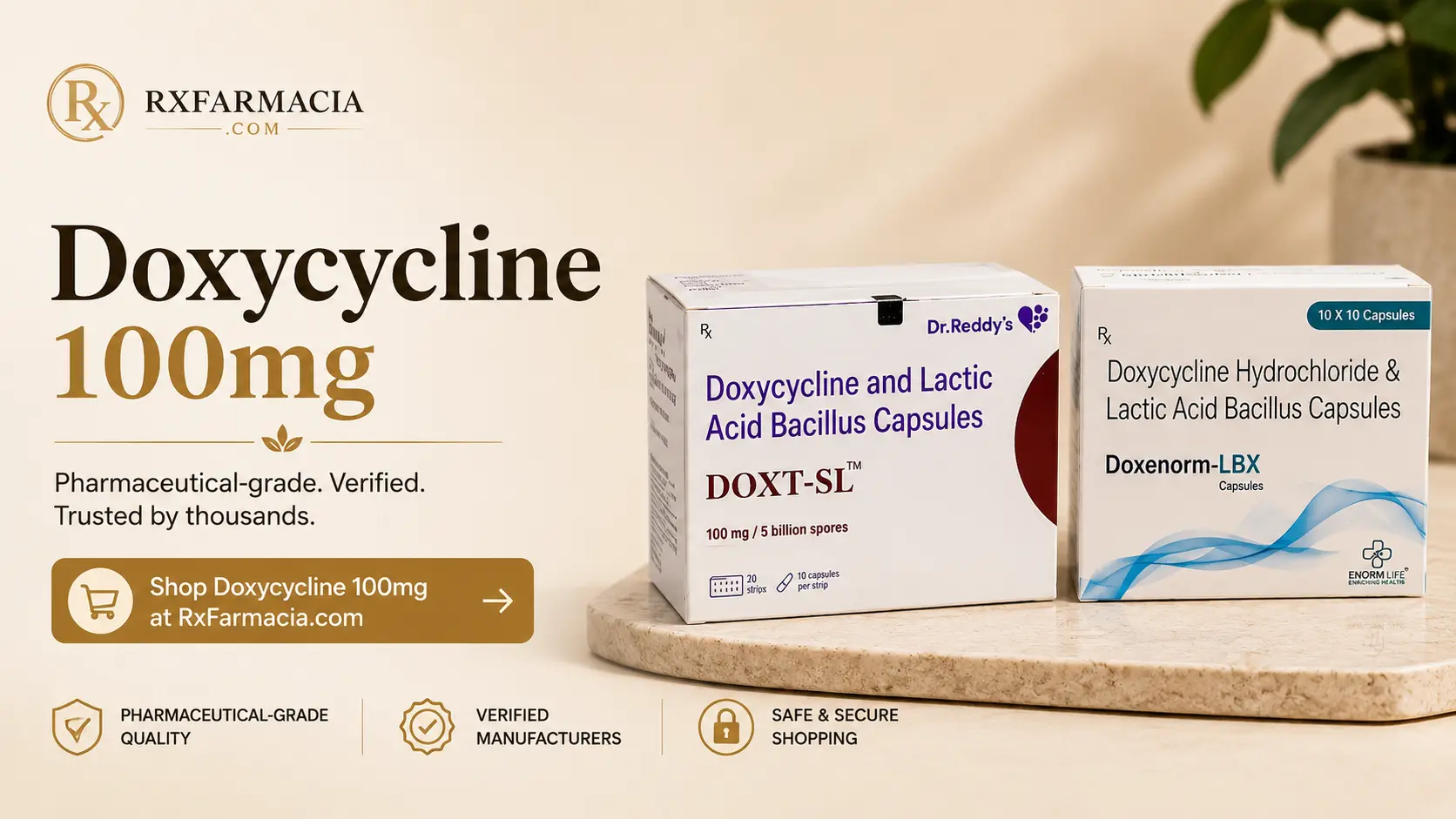
Get Doxycycline 100mg at RxFarmacia.com
rxfarmacia.com carries pharmaceutical-grade doxycycline 100mg in two formulations from verified WHO-GMP-certified manufacturers.
View Doxycycline 100mg Doxt-SL at RxFarmacia.com →
View Doxycycline 100mg Doxenorm-LBX at RxFarmacia.com →
For the complete guide on alcohol timing and other practical doxycycline interactions, see the Doxycycline and alcohol guide at RxFarmacia.com.
For what to expect after your doxycycline course ends, including rebound effects and microbiome recovery, see the Doxycycline side effects after stopping guide at RxFarmacia.com.
Frequently Asked Questions
How soon after taking doxycycline can I eat dairy?
Do not take dairy products for at least 2 hours after taking doxycycline. Some clinical suggestions extend this period to 2 to 3 h for optimum margin. Doxycycline and milk are incompatible because calcium interacts with the drug in the gastrointestinal tract, leading to a reduction in absorption of about 30%. Spacing them out two hours apart ensures that the dosage has been absorbed before any possible dairy calcium interference.
How long after eating dairy can I take doxycycline?
Do not take your dose of doxycycline for at least 1 to 2 hours after eating dairy products. The standard doxycycline with dairy interval used by most healthcare providers is 2 hours in either direction: 2 hours after taking the medication before you can have dairy, and 2 hours before taking the medication after you have had dairy. Calcium from a meal including dairy will remain in the stomach and small intestine throughout this time and may interfere with absorption.
Can I take doxycycline hyclate with milk?
No, despite the FDA hyclate label suggesting that the contemporaneous eating of food or milk does not significantly impair absorption. That is talking about non-dairy products generally being taken with no reduction of absorption, not specifically about milk or dairy items. Pharmacokinetic studies have demonstrated that the concurrent administration of doxycycline with dairy products may lead to a 20 to 30% average reduction in absorption, even with the hyclate formulation. Doxycycline hyclate. The standard 2-hour separation from dairy products applies.
What foods can I take with doxycycline?
Doxycycline can be used with non-dairy food and is indeed recommended to do so if you experience stomach upset. Doxycycline is not significantly affected by the presence of eggs, bread, fruit, rice, and plant-based proteins. Doxycycline and dairy are only affected by calcium-rich meals and supplements, not the entire diet. Do not take dairy, antacids, calcium supplements, or iron supplements for 2 hours after taking the dose.
Do doxycycline and dairy cause treatment failure?
Total treatment failure due to a single incident of concurrent intake of doxycycline and dairy is uncommon; nevertheless, regular ingestion of doxycycline with dairy throughout the full duration of therapy considerably lowers the mean therapeutic dose. A 20 to 30% reduction in doxycycline bioavailability during a 7 to 14-day course takes place persistently and leads to lower than expected drug levels in blood and tissues for the duration of treatment. This may prolong the infection or, in some cases, allow sub-therapeutic levels of the drug to occur that promote the development of bacterial resistance.
Does the doxycycline and dairy interaction apply to cheese and yogurt?
Yes. All dairy products, milk, cheese, yoghurt, ice cream, and cream include calcium, and all these interact with doxycycline by the same chelation mechanism. Calcium concentration per serving of cheese and yoghurt relative to milk may vary, while all are included in the doxycycline and dairy timing recommendations.
The Bottom Line
The doxycycline-dairy interaction is a real, proven, and therapeutically significant phenomenon. Dairy products contain calcium that binds doxycycline in the stomach, forming insoluble complexes, reducing its bioavailability by about 30% in pharmacokinetics, with a range of 9 to 53% depending on the amount of dairy, formulation, and time of administration.
Both clinical references and the FDA label consistently recommend a uniform 2-hour interval in both directions, 2 hours after taking the medication before consuming dairy products and 2 hours after consuming dairy before taking the medication, for doxycycline hyclate and other forms of doxycycline, regardless of the label wording that has confused so many patients. Dairy products are not involved in the interaction between doxycycline and dairy, and they may be taken together with your dose of doxycycline to help reduce gastrointestinal side effects.
Recognising the link between doxycycline and dairy is more likely to simplify, not complicate, adherence. You can use dairy products while on doxycycline. It needs a two-hour window before and after each administration.
