
Blog
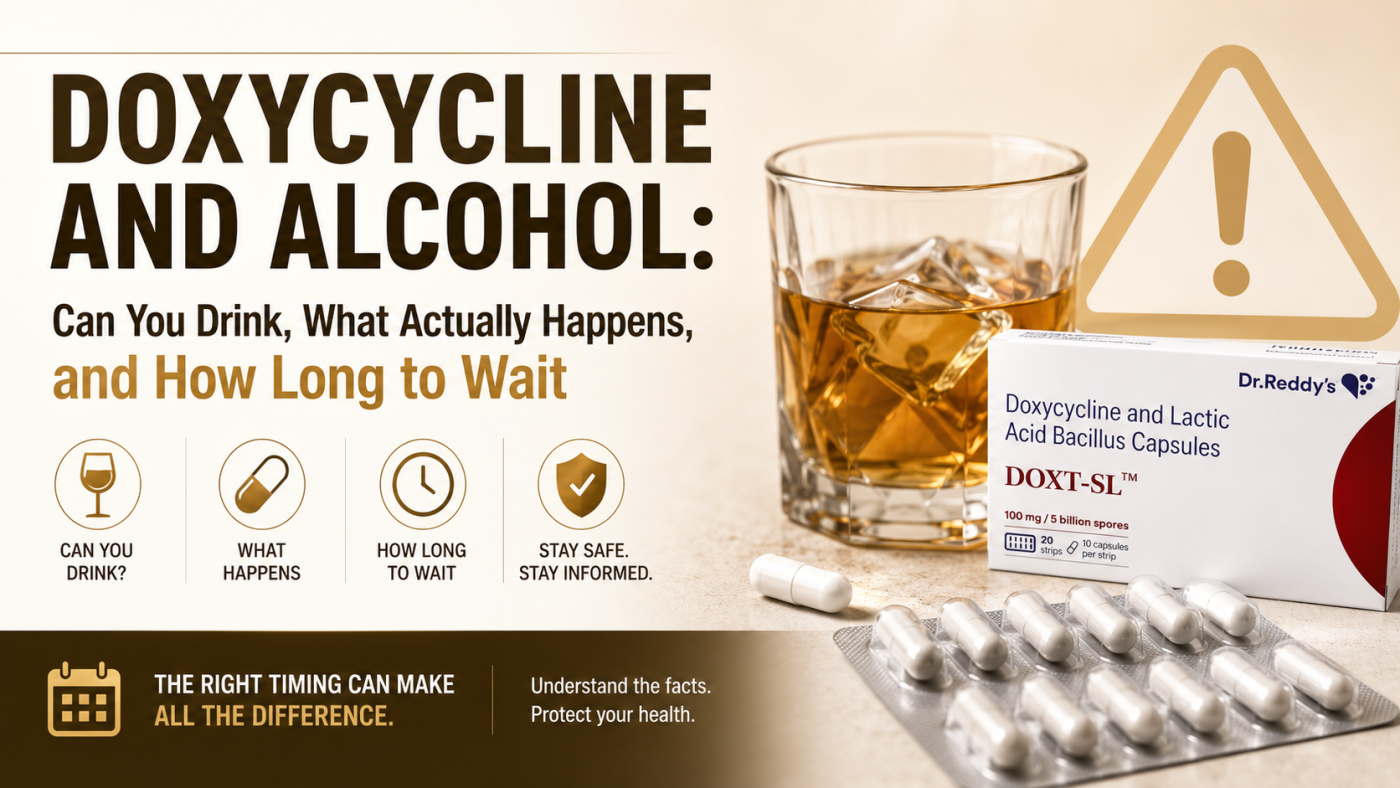
Doxycycline and Alcohol: Can You Drink, What Actually Happens, and How Long to Wait
Jun
Many people have the question of doxycycline and alcohol, and the answers are usually conflicting. Other people want to avoid drinking altogether. Some say it doesn’t matter at all. Others liken it to the reaction caused by Flagyl, which causes unnecessary terror in other people.
All of those answers are less than perfectly true. The evidence is consistent with your particular query.
Can You Drink on Doxycycline? The Direct Answer
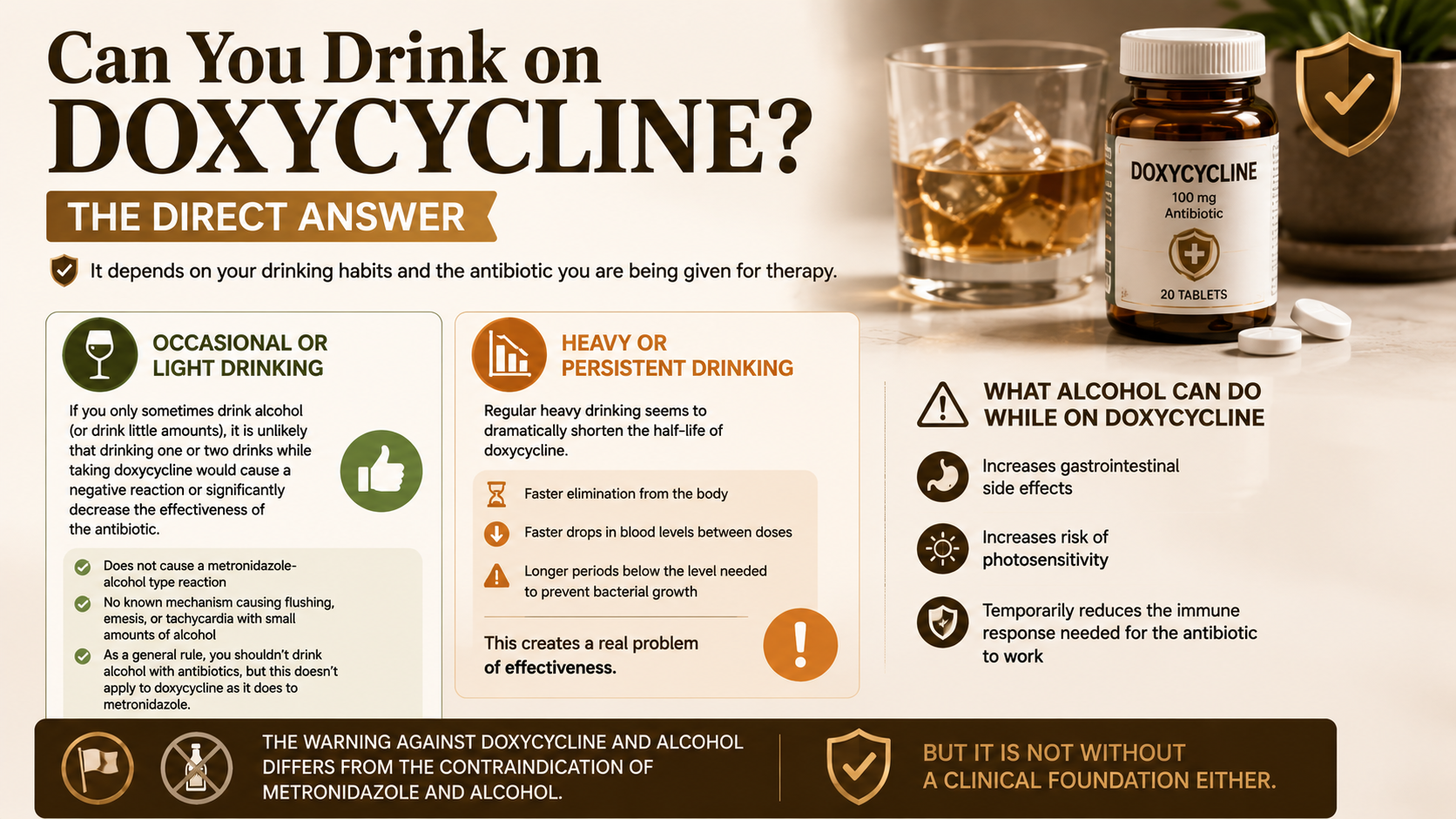
It depends on your drinking habits and the antibiotic you are being given for therapy.
If you only sometimes drink alcohol (or drink little amounts ), it is unlikely that drinking one or two drinks while taking doxycycline would cause a negative reaction or significantly decrease the effectiveness of the antibiotic. It does not work the way a metronidazole-alcohol reaction does. No biochemical mechanism has been found that causes appreciable flushing, emesis, or tachycardia with small doses of alcohol. As a general rule, you shouldn’t drink alcohol when you’re taking antibiotics, but this doesn’t apply to doxycycline as it does to metronidazole.
The circumstances are different for those who drink heavily or persistently. Regular heavy drinking seems to dramatically shorten the half-life of doxycycline, with clinical data indicating faster elimination from the body, faster drops in blood levels between doses and longer periods when the concentration in the bloodstream falls below the level needed to prevent bacterial growth. That creates a real problem of effectiveness.
People on doxycycline: Alcohol increases the gastrointestinal side effects associated with doxycycline and increases the risk of photosensitivity. It also temporarily reduces the immune response that is required for the antibiotic to work.
The warning against doxycycline and alcohol differs from the contraindication of metronidazole and alcohol. But it is not without a clinical foundation either.
What Alcohol Actually Does to Doxycycline in Your Body
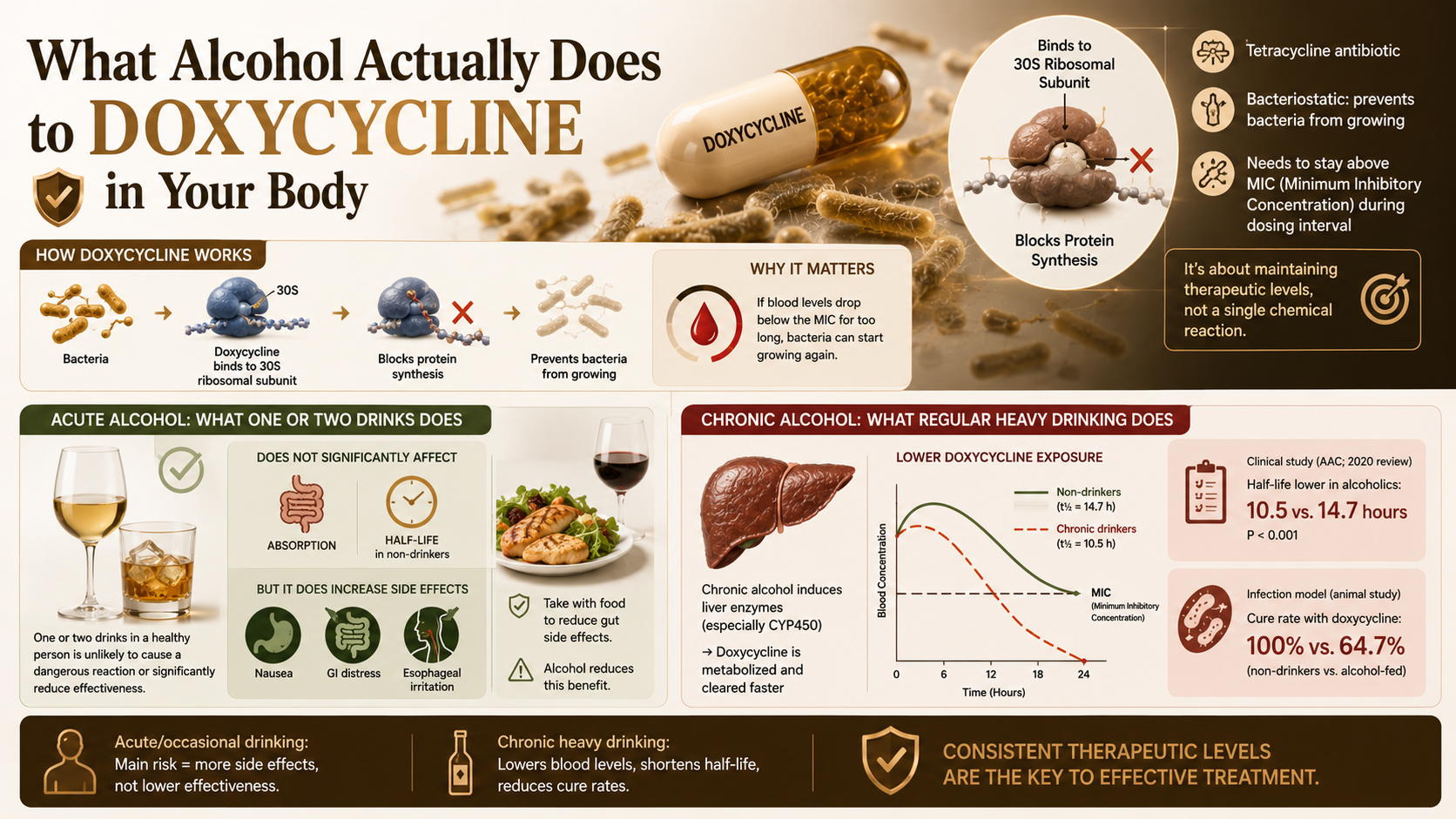
Doxycycline is a tetracycline antibiotic that kills bacteria by binding to the 30S ribosomal subunit and blocking protein synthesis. It is bacteriostatic, meaning it prevents bacteria from growing, rather than killing off microorganisms outright. The principle of operation of this mechanism is essentially based on keeping the minimum inhibitory concentrations (MIC) in the blood during the dosing interval. If blood levels are below the minimum inhibitory concentration (MIC) for long periods of time, microbes have a chance to start replicating again.
This explains the importance of the pharmacokinetics of doxycycline with alcohol. This is not about some single, amazing chemical process. The focus is on the length of time the medicine is at therapeutic levels that are sufficient to do what it is meant to do.
Acute Alcohol: What One or Two Drinks Does
In a healthy person, a single drink of alcohol on doxycycline will not cause a dangerous reaction and is unlikely to cause a clinically significant reduction in the effectiveness of the antibiotic. Acute alcohol consumption does not significantly influence the absorption or half-life of doxycycline in subjects who do not drink chronically.
Side effects of doxycycline include gastrointestinal side effects that are among the most common and are worsened by one or two drinks while taking doxycycline. Doxycycline + Alcohol: Nausea, gastrointestinal distress, and esophageal irritation are considerably increased in frequency and intensity. Doxycycline taken with food will reduce the side effects on the gut; the addition of alcohol will greatly reduce this benefit.
Chronic Alcohol: What Regular Heavy Drinking Does
Chronic alcohol excess induces hepatic enzymes, particularly the cytochrome P450 system, which metabolizes doxycycline. Chronic alcohol consumption induces these enzymes, such that doxycycline is cleared from the body faster in drinkers than in non-drinkers.
This is clinical evidence, and specific. It has been peer reviewed. A study in Antimicrobial Agents and Chemotherapy included in the full review of antibiotic-alcohol interactions in PMC in 2020 showed that the half-life of doxycycline was significantly lower in alcoholics than controls (10.5 vs. 14.7 hours; P < 0.001). In some patients with chronic alcohol drinking, blood doxycycline levels fell below the minimal therapeutic concentration when given once daily, the usual schedule. This led to the conclusion that a bi-daily dose might be required for people with alcohol consumption disorder.
In a controlled animal model of infection, chronic alcohol consumption lowered the cure rate of doxycycline from 100% in the controls to 64.7% in the alcohol-fed individuals. This outcome data translates a pharmacokinetic finding into a clinically relevant question.
The Three Ways Alcohol Affects Doxycycline Treatment
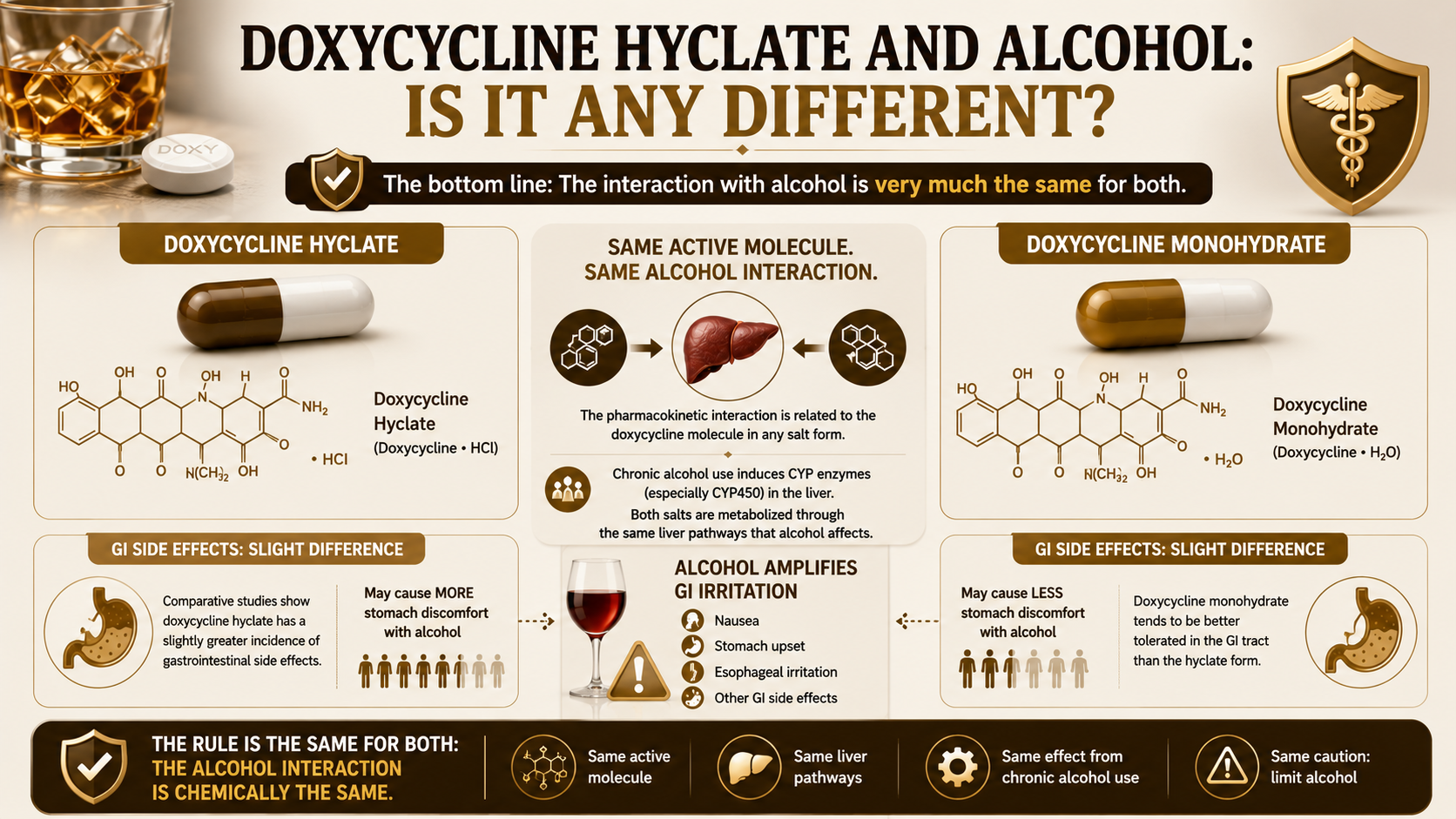
Doxycycline Hyclate and Alcohol: Is It Any Different?
Doxycycline comes in two main salts: doxycycline hyclate and doxycycline monohydrate. This discrepancy typically comes up in questions surrounding doxycycline and alcohol, and the bottom line is that the interaction with alcohol is very much the same for both.
The pharmacokinetic interaction is related to the doxycycline molecule in any salt form, especially the CYP enzyme induction from chronic alcohol abuse. Both are metabolized through the same liver pathways that alcohol affects.
Comparative studies have shown doxycycline hyclate to have a slightly greater incidence of gastrointestinal side effects than doxycycline monohydrate. Gastrointestinal amplification is a key result of mixing doxycycline and alcohol. People who take hyclate formulations may have more stomach discomfort while drinking alcohol than those who take monohydrate formulations. The rule is the same for both, and the alcohol interaction is chemically the same.
Doxycycline vs Other Antibiotics: Where It Falls on the Alcohol Risk Spectrum
The question of doxycycline and alcohol is complicated by the wide variety of responses associated with different antibiotics; the general rule that one should not drink alcohol while on any antibiotic is true for some drugs, but overstates the risk for others.
Why Pharmacy Labels Do Not Always Warn You
This is where a lot of the misunderstanding about doxycycline and alcohol comes from. A 2020 review in Antimicrobial Agents and Chemotherapy stated that major US pharmacy chains like Walgreens, Rite Aid, and CVS do not put alcohol warnings on doxycycline prescription labels. This puts doxycycline in the same class as cephalexin, azithromycin, and amoxicillin in pharmacy labeling, but it does have a known pharmacokinetic interaction that the others do not.
Lack of a warning label does not mean the interaction does not exist. This suggests that the choice to label is a function of the severity threshold used for pharmacy warning systems and that the interaction between doxycycline and occasional alcohol use is below that threshold. The problem is that patients will naturally take the absence of a warning on the label to mean that there is nothing to worry about. This is true for occasional moderate drinkers, but grossly deceptive for chronic heavy drinkers, for whom the clinical data show a large decrease in effectiveness.
Practical Guidance: If You Are on Doxycycline Right Now
Therapeutic advice is to avoid alcohol during the course of treatment. That is the stance the evidence supports. Compliance will be a matter of individual circumstances, but the following are of crucial importance:
- If you are receiving therapy for a serious bacterial illness such as pneumonia, severe acne, Lyme disease, pelvic inflammatory disease, or sexually transmitted diseases, avoid doxycycline with alcohol altogether. The sickness itself taxes your immune system, and the pharmacokinetic risk is greater for heavy drinkers.
- Doxycycline for malaria prophylaxis when travelling is a four-week course after the trip and persistent alcohol use during this time is a significant risk to immune function and efficacy. If you can’t stop drinking altogether, try to cut back.
- The occasional mild drinking while on long-term, low-dose doxycycline for acne may not significantly alter the effectiveness of the drug, but chronic, heavy drinking could lessen its efficacy and badly impair skin health.
- Don’t take your dose of doxycycline with or immediately after an alcoholic drink. The gastrointestinal side effects of the antibiotic are significantly worse if taken at the same time as alcohol.
- Wear sunscreen and be careful about sun exposure, whether you drink alcohol or not. Doxycycline alone produces considerable photosensitization. If you add booze, it’s worse.
Get Doxycycline 100mg at RxFarmacia.com
rxfarmacia.com carries two pharmaceutical-grade doxycycline 100mg formulations, both from verified manufacturers, with US shipping.
View Doxycycline 100mg Doxt-SL at RxFarmacia.com →
View Doxycycline 100mg Doxenorm-LBX at RxFarmacia.com →
Frequently Asked Questions
Can you drink alcohol while taking doxycycline?
One or two drinks are unlikely to cause a dangerous response or significantly reduce effectiveness in moderate drinkers who drink seldom. The main risks were increased gastrointestinal adverse effects and increased photosensitivity. Heavy or persistent drinkers are known to have a pharmacokinetic interaction that reduces the half-life of doxycycline from around 14.7 hours to 10.5 hours, perhaps leading to blood levels falling below therapeutic levels. For all patients, the clinical advice is to avoid doxycycline and alcohol for the whole course of treatment.
How long after taking doxycycline can you drink alcohol?
The usual clinical guidance is to wait 48 hours from the last dose. In healthy subjects, the half-life of doxycycline ranges from 14 to 22 hours and residual levels decline to around 6 to 25% of the initial concentration after 48 hours. If you have liver disease or an alcohol use problem, you should wait at least 72 hours and check with your doctor.
Does doxycycline and alcohol cause a disulfiram reaction?
No. The disulfiram-like reaction (flushing, emesis, tachycardia and hypotension with low alcohol consumption) is specific to metronidazole (Flagyl) and tinidazole. Doxycycline is not an aldehyde dehydrogenase inhibitor and does not induce this response. For heavy drinkers, the interaction between doxycycline and alcohol is pharmacokinetic, and for all users it leads to gastrointestinal amplification, rather than a substantial chemical reaction.
Can I drink one beer on doxycycline?
A single beer is unlikely to cause a dangerous interaction or significantly reduce the effectiveness of doxycycline in a healthy adult who drinks alcohol in moderation. At this level the risk is mainly increased nausea, gastrointestinal upset and photosensitivity. The advice is still to abstain but the clinical significance of one drink in an otherwise healthy occasional drinker is not disastrous.
Does doxycycline hyclate react differently with alcohol than doxycycline monohydrate?
The pharmacokinetic interaction with alcohol is identical for both salt formulations. In comparison research, doxycycline hyclate has somewhat higher gastrointestinal side effects compared to monohydrate. Thus, the gastrointestinal enhancement from the combination of doxycycline hyclate and alcohol may be more pronounced. The basic relationship of efficacy to metabolism is the same for both.
Can alcohol make doxycycline not work?
For infrequent users, no. And a proven hazard to individuals who have a history of heavy drinking over a long period. A peer-reviewed study showed that the half-life of doxycycline was significantly reduced in people with alcohol use disorder compared to controls. An animal model of infection also showed that the cure rate of doxycycline decreased from 100% in controls to 64.7% in animals chronically consuming alcohol. In individuals with alcohol consumption disorder, therapeutic levels may need to be maintained with bi-daily rather than single daily doses.
Is it okay to drink alcohol while taking doxycycline for acne?
Moderate, occasional alcohol intake is unlikely to significantly affect the treatment outcome of long-term low-dose doxycycline recommended for acne. Chronic heavy alcohol intake may further reduce efficacy via the above mechanism, and is also independently associated with worsened skin health, including inflammation that negates the effects of doxycycline. Alcohol should be avoided during any period of doxycycline, including for the treatment of acne.
The Bottom Line
Talking about doxycycline with alcohol is not the same as talking about metronidazole and alcohol. Anxiety has no disulfiram impact. The greatest risk for infrequent moderate drinkers is increased gastrointestinal side effects and photosensitivity, not treatment failure or dangerous interactions.
The pharmacokinetic interaction is of clinical relevance, as shown by peer-reviewed studies and confirmed for patients with considerable or chronic alcohol use. Doxycycline is cleared faster, leading to longer periods of time during which the blood levels are below therapeutic thresholds and much worse cure rates in animal studies. The statistics most directly support the group that advocates alcohol abstinence during a course of doxycycline and for whom once-daily dosing may not be sufficient.
At the same time or within a few hours of each other, avoid taking doxycycline and alcohol, always wear sunscreen, and avoid drinking alcohol for at least 48 hours after the last dose of the drug.
