
Amino Tadalafil: What It Is, How It Differs from Tadalafil, and What the Research Shows
Amino Tadalafil | RxFarmacia

Amino Tadalafil: What It Is, How It Differs from Tadalafil, and What the Research Shows

quick facts
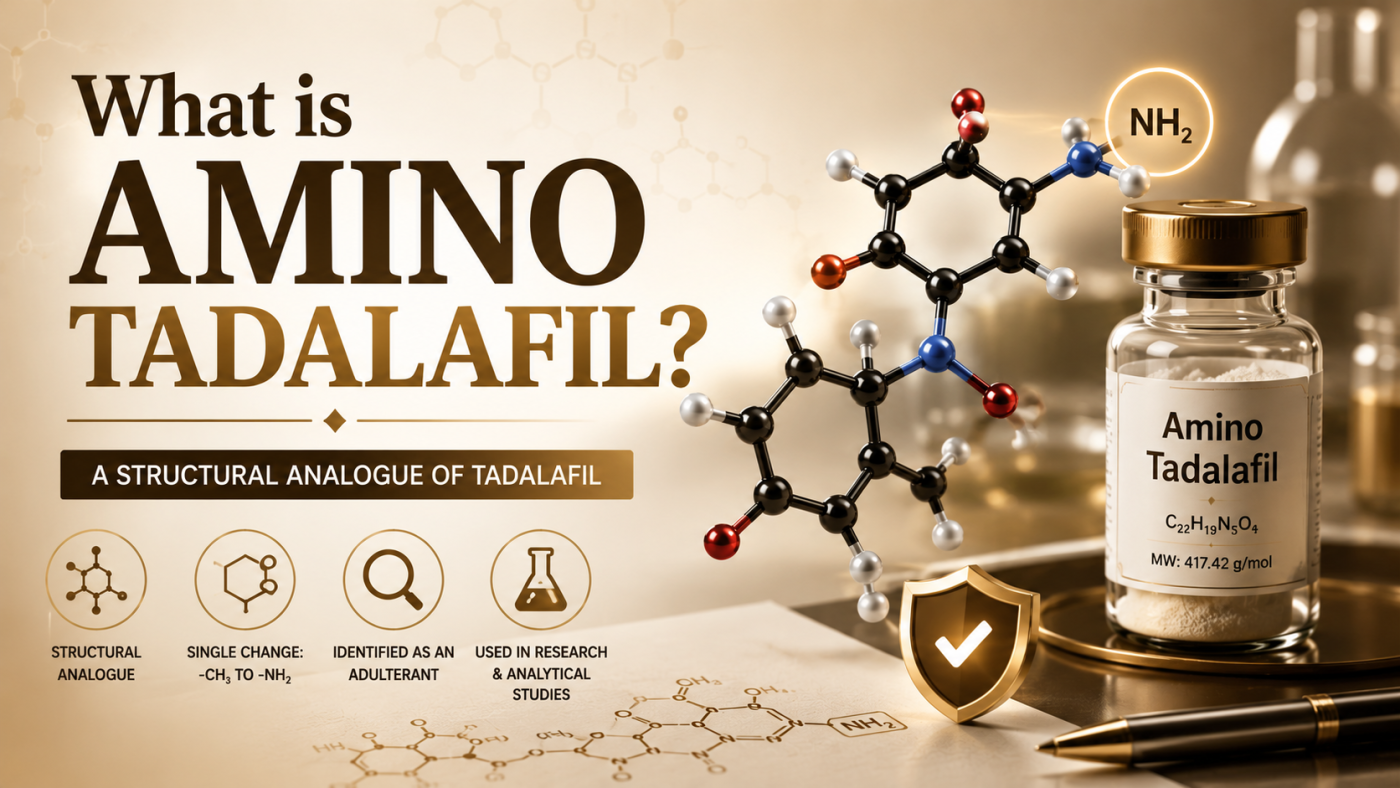
Amino tadalafil is a structural analogue of tadalafil, the active ingredient in Cialis, with one specific chemical modification: the N-methyl group is replaced with an amino (NH2) group
It was first formally identified in peer-reviewed literature in 2006, not as a research breakthrough but as an illegal adulterant found in a herbal product marketed for erectile dysfunction
Amino tadalafil inhibits PDE5 by the same mechanism as tadalafil, but has not completed human clinical trials and is not approved by the FDA or any equivalent regulatory body for human use
Despite claims circulating in research compound communities about improved bioavailability and extended duration, these benefits have not been demonstrated in peer-reviewed human studies
Tadalafil is not a peptide. People searching for a tadalafil peptide are either looking for research compound suppliers who categorize it incorrectly or encountering confusion between small molecule drugs and amino acid chains
The tadalafil plus oxytocin plus PT-141 stack is a documented protocol in the research peptide community, combining three compounds with different mechanisms targeting sexual function
Pharmaceutical-grade tadalafil tablets remain the only form of this compound with an established human safety and efficacy record

Amino tadalafil is a compound that raises more questions than most search results can answer. You’ll find it mentioned in research chemical catalogs, in conversations about supplement adulteration, and in the research peptide community, usually with conflicting descriptions of what it actually is and how it’s better than regular tadalafil.

The factual representation is more accurate and more cautionary than most of the stuff that goes around on the internet. Here is the whole story.

What Is Amino Tadalafil?

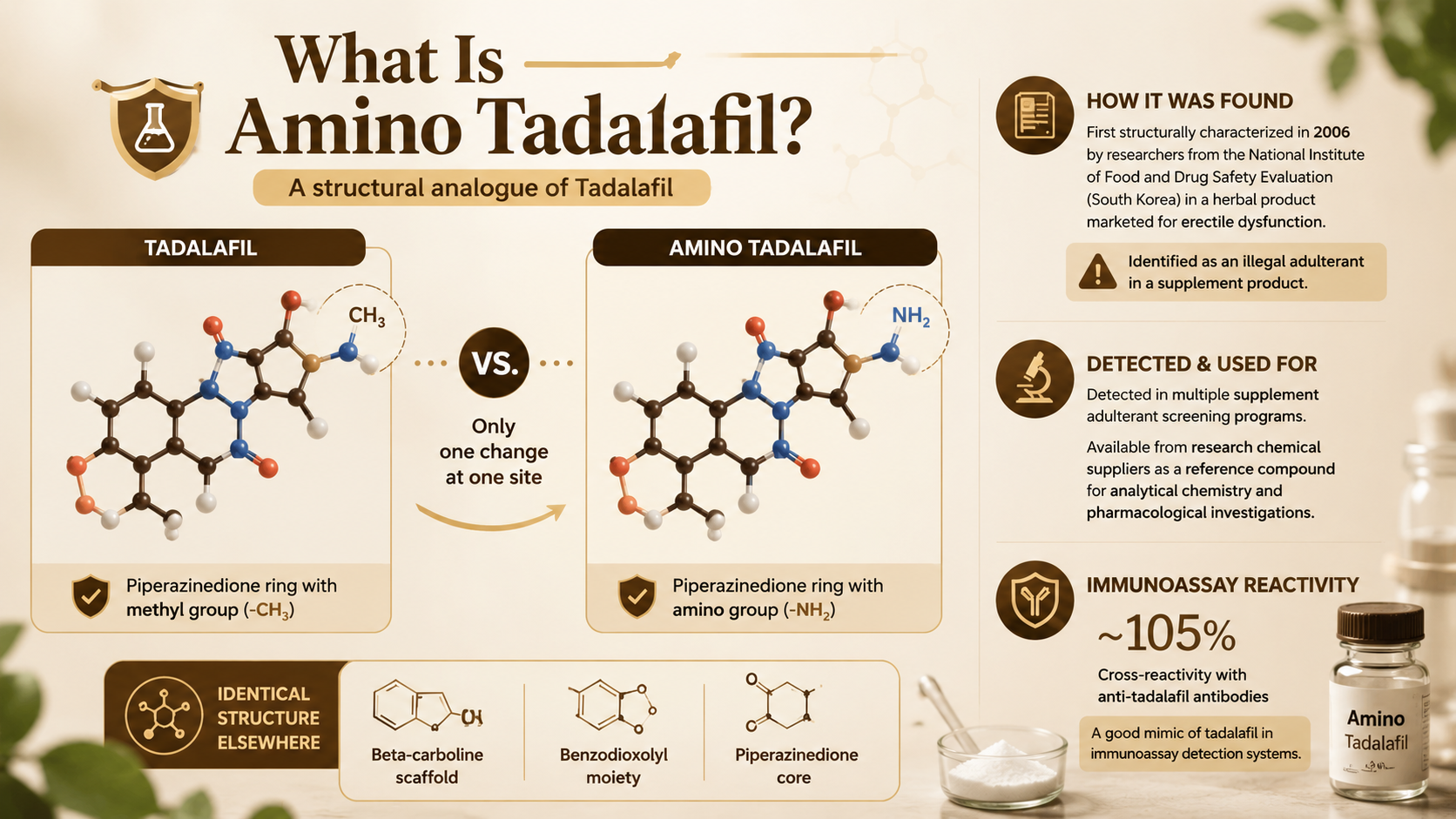
Amino tadalafil is a structural analogue of tadalafil. The two compounds have similar structures. The difference is a single change at one site in the molecule: the nitrogen atom in the piperazinedione ring is replaced by a methyl group (-CH3) in the regular tadalafil. In tadalafil, the methyl group is replaced by an amino group (-NH2). The molecular structure of the remaining molecules, i.e., the beta-carboline scaffold, the benzodioxolyl moiety, and the piperazinedione core, is identical.

This modification was not developed in a drug discovery effort to develop an improved ED therapy. The compound was first structurally characterized in the scientific literature in 2006, when researchers from the National Institute of Food and Drug Safety Evaluation in South Korea isolated it from a herbal product marketed for erectile dysfunction and submitted it for structural elucidation. The article published in Food Additives and Contaminants did not suggest a therapeutic advance but rather identified amino tadalafil as an illegal adulterant in a supplement product.

Amino tadalafil has been detected in several supplement adulterant screening programs and is available from research chemical suppliers as a reference compound for analytical chemistry and pharmacological investigations. It is reported to have ~105% cross-reactivity with anti-tadalafil antibodies, suggesting that it is a good mimic of tadalafil in immunoassay detection systems.
What is Amino Tadalafil | RxFarmacia

Amino Tadalafil vs Tadalafil: The Direct Comparison

feature tadalafil (cialis) amino tadalafil
Chemical distinction
Contains N-methyl group (-CH3) on piperazinedione nitrogen
N-methyl replaced with an amino group (-NH2) at the same position
Mechanism
PDE5 inhibitor; increases cGMP; relaxes smooth muscle in penile tissue; supports erection during sexual arousal
Same PDE5 inhibitory mechanism; cross-reactivity with tadalafil antibodies at ~105%
FDA approval status
Approved for erectile dysfunction, BPH, and pulmonary arterial hypertension
Not approved for any human use
Human clinical trials
Extensive decades of Phase 2 and Phase 3 data; well-characterized pharmacokinetics
None completed; preclinical stage only
First documented use context
Developed by Eli Lilly; approved in 2003 following a rigorous clinical program
First identified in 2006 as an adulterant in a herbal supplement
Claimed advantages in the research compound community
N/A (standard reference)
Improved bioavailability and extended duration claimed; not demonstrated in peer-reviewed human studies
Availability
Prescription medication; pharmaceutical-grade generic tablets are widely available
Research chemical suppliers; found in adulterated supplements; not available in pharmaceutical-grade human formulations
Safety data in humans
Extensive; well-characterized side effect profile
No formal human safety data

The Supplement Adulterant History: Why This Matters

The image is affected by the fact that amino tadalafil was first detected as an adulterant, rather than as a pharmaceutical innovation.

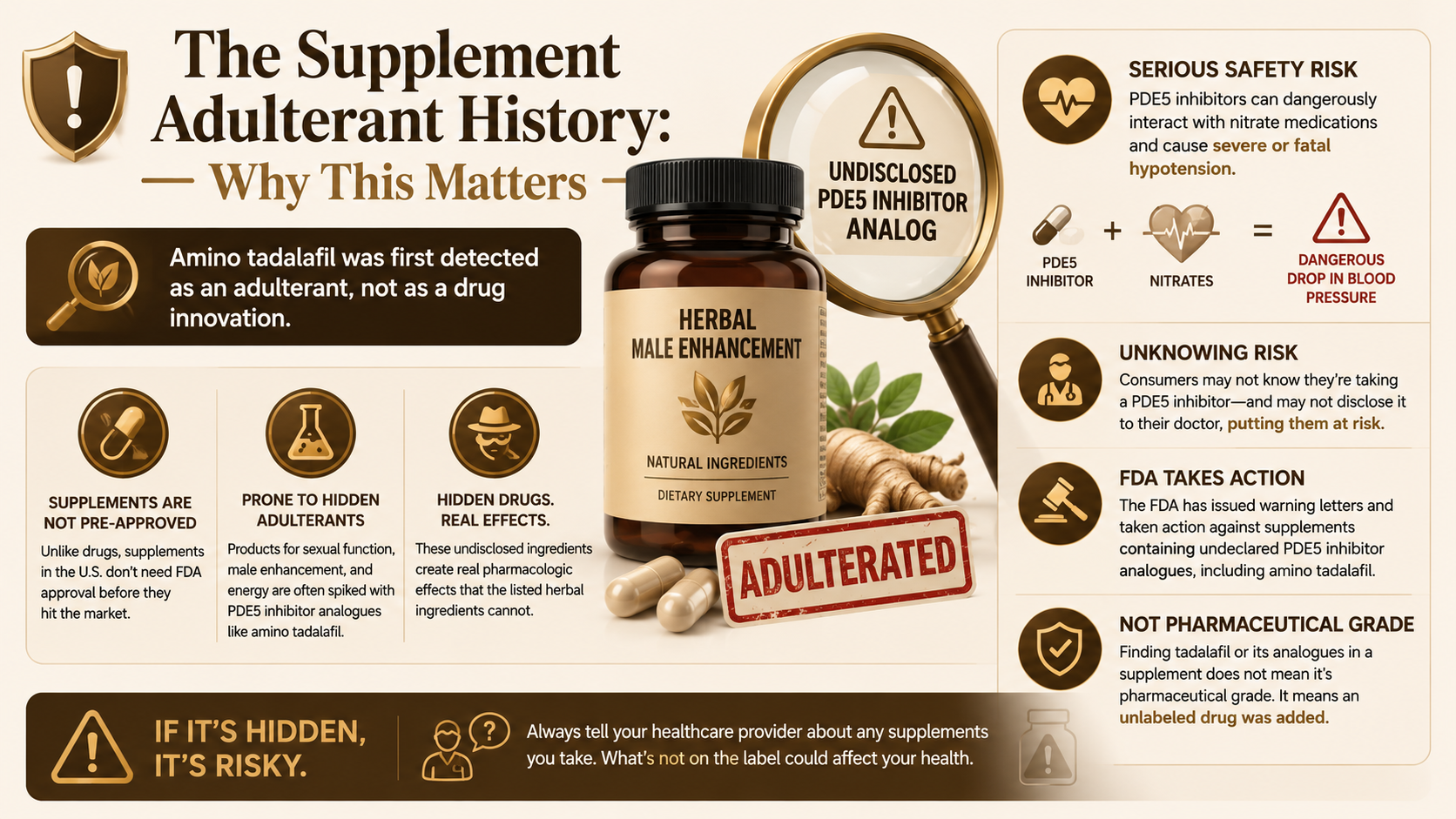
Unlike pharmaceutical drugs, dietary supplements in the United States do not have to be approved before they are marketed. A well-defined class of supplements susceptible to adulteration with undisclosed PDE5-inhibitor analogues includes those sold for sexual function, male enhancement, and energy. These analogs, including amino tadalafil, homotadalafil, cyclopentyltadalafil and others, are added to supplement products to produce actual pharmacologic effects that the botanical or herbal ingredients listed on the label could not produce on their own.

The safety problem with this practice is far more than just a matter of regulation. PDE5 inhibitors have an important contraindication with nitrate medications, as this interaction can cause serious and potentially fatal hypotension. The consumer who buys a supplement labelled as a herbal product and unknowingly receives a PDE5 inhibitor analogue may be at risk without knowing they need to tell their doctor, cardiologist, or emergency medical staff that they are using a PDE5 inhibitor.

The FDA has taken action against a number of supplement products found to contain undeclared PDE5 inhibitor analogues, such as amino tadalafil. The presence of tadalafil in a purchased product does not mean that the product is pharmaceutical grade. The product contains a drug analogue that was not labelled but should have been labelled.
RxFarmacia

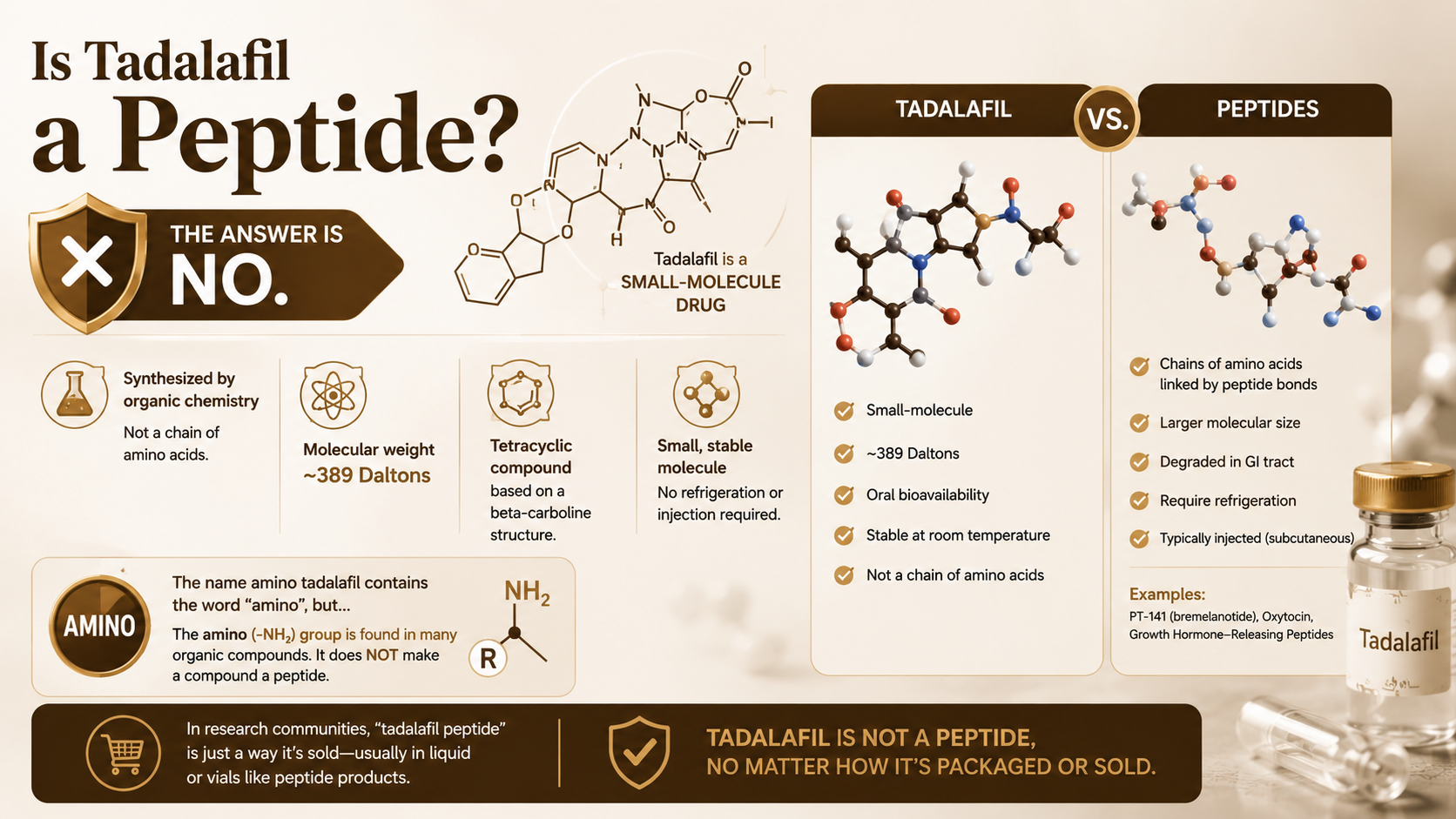
Is Tadalafil a Peptide?

The answer is no, and it’s important to clear up the confusion because the terms tadalafil peptide and amino tadalafil are often used interchangeably in the research compound community.

Tadalafil is a small-molecule drug. It was synthesized by methods of organic chemistry. It has a molecular weight of about 389 Daltons. It’s a tetracyclic compound based on a beta-carboline structure. It’s not a chain of amino acids.

Peptides are chains of amino acid residues linked by peptide bonds. Examples include PT-141 (bremelanotide), oxytocin, and growth hormone-releasing peptides. These are generally larger molecules that need refrigeration for stability and are usually given by subcutaneous injection because they are degraded in the GI tract.

The name amino tadalafil contains the word “amino”, which creates a false superficial link to amino acids. The functional group amino (-NH2) is present in many organic compounds, such as amino acids; however, the presence of an amino group does not alone make a compound a peptide or a peptide derivative.

So, in many research compound vendor and online community discussions, you’ll find tadalafil peptide mentioned as an option for those looking to buy tadalafil from a research chemical vendor, usually in liquid form or in vials of peptide products, not as a pharmacological classification. The compound is not a peptide, no matter how it is packaged and sold.
Is Tadalafil a Peptide? | RxFarmacia

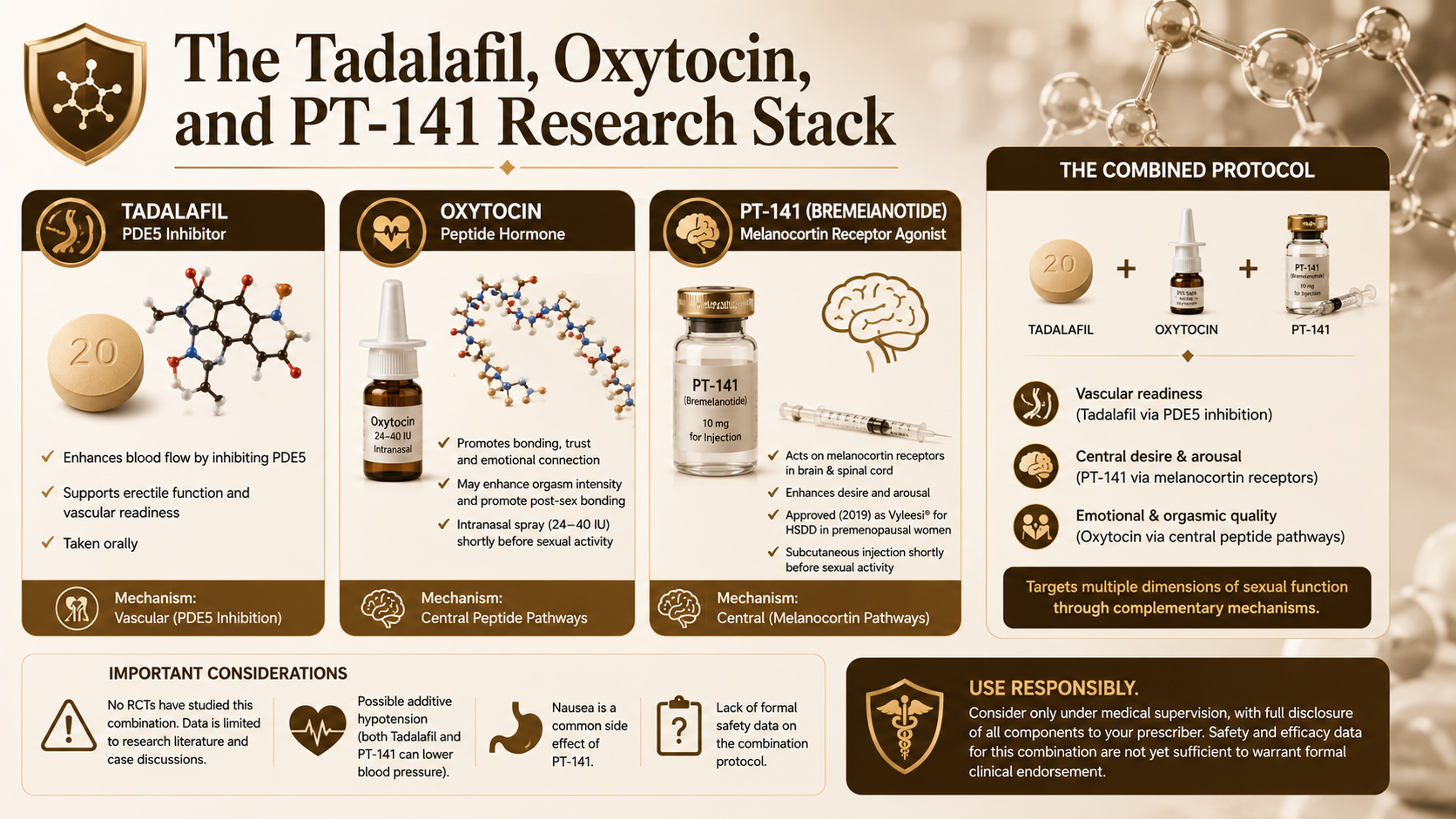
The Tadalafil, Oxytocin, and PT-141 Research Stack

Interaction of tadalafil with oxytocin and PT-141 (bremelanotide) is a separate topic from amino tadalafil, but comes up in the same search context and deserves to be mentioned explicitly.

PT-141 (Bremelanotide)

PT-141 is a melanocortin receptor agonist derived from Melanotan II, a synthetic alpha-melanocyte-stimulating hormone analogue. PT-141 works centrally on melanocortin receptors in the brain and spinal cord to activate pathways associated with sexual arousal and desire, unlike PDE5 inhibitors that work on the vasculature to help erections.

In 2019, the FDA approved PT-141, marketed as Vyleesi, to treat hypoactive sexual desire disorder (HSDD) in premenopausal women. This drug is injected subcutaneously shortly before sexual activity. In research settings, some men use it off-label to augment desire and arousal, its primary mechanism thought to be complementary to that of PDE5 inhibitors targeting vascular function.

Oxytocin

Oxytocin is a peptide hormone produced in the hypothalamus and released from the posterior pituitary gland. It’s all about social bonding, trust, pair bonding, and orgasmic reaction. In peptide research protocols, it is usually administered as an intranasal spray, in doses of between 24 and 40 IU, shortly before sexual activity.

Oxytocin is included in a stack for sexual functioning because it has been shown to increase orgasm intensity, promote emotional closeness during sex, and promote bonding after sex. The evidence for intranasal oxytocin in sexual function is in its infancy. The compound has more clinical data related to social anxiety and autism spectrum studies than sexual medicine.

The Combined Protocol

Some research peptide communities combine tadalafil, oxytocin, and PT-141 to simultaneously target various aspects of sexual function: vascular readiness (tadalafil via PDE5 inhibition), central desire and arousal (PT-141 via melanocortin receptors), and emotional/orgasmic quality (oxytocin via central peptide pathways).

No completed randomized controlled trials have investigated this particular combination. The protocol is described in the research literature and in clinical case discussions, but not in established clinical guidelines. Possible issues include additive hypotension (i.e., a drop in blood pressure) from PT-141 and tadalafil (both of which can lower blood pressure), nausea, a common side effect of PT-141, and the general lack of formal safety data on the combination.

Those who are considering this protocol should do so under medical supervision, with full disclosure of all components to their prescriber, and with the understanding that safety and efficacy data for the combination are not yet sufficient to warrant formal clinical endorsement.
Tadalafil | Genixmeds

The Research Status of Amino Tadalafil

Amino tadalafil is in the preclinical research phase as of 2026. The compound is listed and available from research chemical suppliers such as MedChemExpress and APExBIO for research use only (not for human consumption) in vitro and in vivo laboratory research.

Amino tadalafil is an inhibitor of PDE5, supported by in vitro data. The relative potency against tadalafil and selectivity for related PDE isoforms have not been fully characterized in the peer-reviewed clinical pharmacology literature. Published pharmacokinetic studies in humans do not support the common claims in research compound communities of improved bioavailability and longer duration.

The practical implication is straightforward: there is no established human dosage, pharmacokinetics, safety profile, or regulatory approval for amino tadalafil in any jurisdiction. The data required for this are not available, so an honest comparison with tadalafil for claimed improvements is not possible at present.

aspect what is known what is not known
PDE5 inhibitory activity
Confirmed in vitro; cross-reactivity with tadalafil antibodies at ~105%
Relative potency vs tadalafil in human tissue; isoform selectivity profile
Human pharmacokinetics
None published
Onset time, peak concentration, half-life, duration of effect, food interaction, and clearance pathway in humans
Human safety
No formal human safety studies
Adverse effect profile, drug interaction profile, and contraindication risk relative to tadalafil
Clinical efficacy
No human clinical trials
Whether it produces superior, equivalent, or inferior erectile function improvement vs tadalafil in humans
Claimed benefits (bioavailability, duration)
Speculative; based on structural reasoning
Whether amino group modification actually improves absorption or extends half-life in humans

Why Pharmaceutical-Grade Tadalafil Remains the Appropriate Choice

The difference between tadalafil and amino tadalafil is like the difference between pharmaceutical ivermectin and veterinary ivermectin, and the difference between pharmaceutical fenbendazole and veterinary granule packets. The active mechanism looks similar. The difference is that the compound in use is backed by decades of human safety and efficacy data.

Standard tadalafil has been studied in randomized controlled trials with hundreds of thousands of subjects. Its pharmacokinetics in humans have been accurately delineated. It has been noted to interact with other pharmaceuticals. Effective and safe doses have been determined. The thorough clinical development is reflected in the clear contraindications in the prescribing information, especially regarding nitrates.

The pharmaceutical-grade generic tadalafil tablets from WHO-GMP or equivalent certified manufacturers contain the same active compound in the same dosages that produced those results, and are manufactured to the same standards that ensure the stated dosage is present in the tablet.

Amino tadalafil doesn’t offer any of those benefits in the current research field. It is a structurally similar compound with the same theoretical mechanism that lacks human safety data, has no clinical trial documentation, and has a history of being found in unregulated supplement products that intentionally hid its presence from consumers.

View Tadalafil 20mg at RxFarmacia.com

View Sildenafil 100mg at RxFarmacia.com

For the complete comparison of sildenafil, tadalafil, and vardenafil at standard pharmaceutical doses, see the Sildenafil vs Tadalafil vs Vardenafil guide at Genixmeds.co.

Frequently Asked Questions

What is amino tadalafil?

Amino tadalafil is a structural analogue of tadalafil where the N-methyl group on the piperazinedione nitrogen is replaced by an amino (-NH_2) group. It works by inhibiting PDE5, as does tadalafil. It was first reported in the published literature in 2006 as an illicit adulterant in a supplement sold for erectile dysfunction. It has not been tested in human clinical trials and is not approved by any regulatory agency for human use.

Is amino tadalafil better than tadalafil?

There is no peer-reviewed human clinical data, so an honest comparison is not possible. Some research compounds speculate that amino tadalafil has improved bioavailability and a longer duration based on its structural modification, but these claims are speculative. No human pharmacokinetic studies have been published to support or refute them. Standard tadalafil has decades of human clinical trial data, well-characterized pharmacokinetics, and established safety and efficacy. Amino tadalafil doesn’t have any.

Is tadalafil a peptide?

No. Tadalafil is an organic chemist-synthesized small molecule drug with a molecular weight of around 389 Daltons. Peptides are chains of amino acid residues connected by peptide bonds. The amino group in tadalafil is a functional group that is found in many organic compounds, and it does not mean that the compound is a peptide. Some research chemical suppliers are selling tadalafil in the same formats as those associated with peptide products, which can be confusing. However, pharmacologically, tadalafil is still a small-molecule drug.

What is the tadalafil oxytocin PT-141 stack?

This is a research peptide protocol that includes tadalafil (PDE5 inhibitor, vascular mechanism), PT-141 or bremelanotide (melanocortin receptor agonist, central arousal mechanism), and oxytocin (hypothalamic peptide hormone, bonding and orgasmic quality mechanism). The three compounds affect different aspects of sexual functioning via different pathways. No completed randomized controlled trials exist studying this specific combination. Possible concerns include additive hypotension and PT-141-related nausea. Should only be used under medical supervision with full disclosure to your prescriber.

Where is amino tadalafil found?

Amino tadalafil is listed by research chemical suppliers as an analytical reference compound for laboratory use. It has also been detected as an undisclosed adulterant in dietary supplements and herbal products marketed for erectile dysfunction or as a general energy/tonic. It is not available in any regulatory-approved, pharmaceutical-grade human tablet formulations.

Is amino tadalafil safe?

There are no formal human safety data for amino tadalafil. As a PDE5 inhibitor analogue, it would have the same contraindication as tadalafil itself with nitrate medications, which can be potentially fatal. Because there are no human pharmacokinetic data, the duration of risk and the appropriate exclusion period from nitrate medications are unknown. Tadalafil of pharmaceutical grade has a well-characterized safety profile and is the appropriate choice for human use.

The Bottom Line

Amino tadalafil is very similar in structure and mechanism to tadalafil, and it is really interesting as a research compound. Its story does not start in a drug development lab, but in a regulatory investigation of adulterated supplements. It remains preclinical for clinical research. There are no published human data to support claims of benefit over standard tadalafil.

The practical lesson is the same as it is for most research compounds that are analogues of existing drugs: the research is genuine, but it is in its infancy, the claimed benefits are not yet proven, and the compound that you can actually trust for human consumption is the one that has the clinical trial record, the characterized pharmacokinetics, and the pharmaceutical manufacturing standards. In this case, it is tadalafil, taken at established doses, from a verified pharmaceutical source.

Medical Disclaimer: This article is for informational and educational purposes only. Amino tadalafil is not approved for human use. Tadalafil is a prescription medication. Do not take any PDE5 inhibitor with nitrate medications. Consult a licensed healthcare provider before using tadalafil or any related compound, particularly if you have cardiovascular disease or take any other prescription medications.

Leave a Reply

Your email address will not be published. Required fields are marked *