

Blog
Doxycycline for Ear Infection: Why It Usually Isn’t the Right Antibiotic

Jul
Two things happen when someone asks about doxycycline for ear infections. They have leftover doxycycline from a previous prescription and are asking whether it will help their current ear discomfort, or they have recently had doxycycline for another condition and are asking whether it will be of any value for their ear infection.
Doxycycline should not be used for the two major types of otitis media. The indiscriminate use of this medicine, thinking that any antibiotic will do, may cause a serious delay in the commencement of appropriate treatment. This explains why doxycycline is not a viable treatment for otitis media in light of current clinical standards and the availability of effective alternatives.
Two Different Infections: Otitis Media and Otitis Externa
Doxycycline is not useful for ear infections, especially otitis media, because it has a limited broad-spectrum activity. Different strains of bacteria that cause otitis media have different patterns of resistance to different classes of antibiotics, while the recommended agents (amoxicillin, amoxicillin-clavulanate, and certain cephalosporins) are known to effectively penetrate middle ear fluid against these particular pathogens. Current paediatric recommendations do not recommend doxycycline as a first- or second-line agent for otitis media.
A key hurdle for the population most afflicted by this issue is that doxycycline is generally contraindicated for children under 8 years of age because of the risk of permanent tooth discolouration and probable negative effects on skeletal growth. Acute otitis media is most common in infants and young children, the population most likely to be treated for ear infections, and also at greatest risk for the age-related side effects of doxycycline.
Why Doxycycline for Ear Infection Falls Short for Otitis Media
For acute otitis media, amoxicillin remains the standard first-choice antibiotic. A review of antibiotic management for acute otitis media published in PMC (PMC: Antibiotic management of acute otitis media) identifies the most frequent causative bacteria as Streptococcus pneumoniae, nontypeable Haemophilus influenzae, and Moraxella catarrhalis, and confirms that despite theoretical concerns about resistance, amoxicillin continues to be as effective as any other oral antimicrobial agent for treating this specific infection in children.
The official clinical practice guideline from the American Academy of Pediatrics, published in the journal Pediatrics (AAP: The Diagnosis and Management of Acute Otitis Media), recommends amoxicillin as the standard first-line antibiotic when treatment is indicated, with amoxicillin-clavulanate as the alternative for children who have recently received amoxicillin or who have a concurrent condition like purulent conjunctivitis. Doxycycline does not appear as a recommended option in this guideline.
Doxycycline is not effective for ear infections, especially otitis media, because it does not cover enough of the germs involved. Bacterial strains causing otitis media have different resistance profiles to different classes of antibiotics, but the recommended treatments (amoxicillin, amoxicillin-clavulanate, and some cephalosporins) have demonstrated efficacy in reaching middle ear fluid against these particular pathogens. Current paediatric recommendations do not support the use of doxycycline as first- or second-line therapy for otitis media.
One of the biggest challenges for the group most affected by this problem is that doxycycline is usually contraindicated in children under the age of 8 years because of the risk of irreversible tooth discolouration and possibly impairment of skeletal development. Acute otitis media is most commonly reported in infants and young children. Therefore, this population is more likely to require pharmacological therapy for ear infection with doxycycline, at a higher risk of age-related adverse effects.

Why Doxycycline for Ear Infection Falls Short for Otitis Externa
For otitis externa, the mismatch with doxycycline for ear infection is even more fundamental: current guidelines do not recommend oral antibiotics of any kind as first-line treatment. A systematic review of antibiotic prescribing for acute otitis externa published in PMC (PMC: A Systematic Review of Antibiotic Prescription for Acute Otitis Externa) found that oral antibiotics are associated with disease persistence and recurrence in mild, uncomplicated cases, making them a poor choice for initial therapy, and confirmed that clinical guidelines recommend topical preparations, not systemic antibiotics, as first-line therapy for diffuse, uncomplicated cases.
Topical treatment is effective for otitis externa as the infection is usually localised to the surface of the ear canal. Topical antibiotic drops (often combined with a steroid to reduce inflammation) can directly target the infection at a much higher local concentration than an oral antibiotic delivered systemically through the bloodstream. Systemic antibiotics such as doxycycline are specifically not recommended for otitis externa (except for some complicated cases) as they expose the whole body to the effects of the antibiotic, including the risk of resistance, to treat an infection that can be dealt with more directly and effectively by topical treatments.

The One Legitimate Exception: Malignant Otitis Externa
In a rare type of ear infection, with a different severity and treatment than common cases, doxycycline plays a distinct and major function.
Malignant otitis externa or necrotising otitis externa is an uncommon and deadly complication in which an infection of the outer ear spreads beyond the ear canal into the surrounding bone and soft tissue. It primarily affects immunocompromised patients and people with diabetes, populations whose ability to control a localised infection is weakened. This is not the run-of-the-mill, simple swimmer’s ear that most people are thinking of when they’re looking for doxycycline for ear infections.
In this unique and severe condition, the need is for systemic antibiotics as the illness has gone beyond the range of topical treatment. This systemic treatment may involve doxycycline, usually based on culture findings used to identify the microorganisms involved. Other systemic options include: This is a medical emergency that needs specialist attention, not something you can cure yourself with leftover medication.
What Actually Treats an Ear Infection
If You Have Leftover Doxycycline and an Ear Infection
This reflects the real-world situation of high search interest in doxycycline for ear infections. It is unlikely that the proper medication for your current earache will be some leftover doxycycline from a previous prescription for a lung infection, for acne, or some other condition, following the rules already indicated.
The best way to know is with a definitive evaluation by a healthcare provider, who will be able to tell the difference between otitis media and otitis externa (which generally require very different treatment approaches), assess severity, and prescribe the appropriate antibiotic, whether topical or oral, that is appropriate for the specific infection that is diagnosed. The risk of self-administering the wrong antibiotic includes an infection that remains untreated, ongoing pain, and, if oral antibiotics are used for a possibly topical outer ear infection, unnecessary systemic exposure to antibiotics that do not treat the cause of the problem.
What Doxycycline Is Actually Indicated For
That is not to say that doxycycline is a weak or ineffective antibiotic. It has an accepted role, backed by guidelines, in cases where its specific spectrum of activity and tissue penetration are suitable, for example, in some respiratory tract infections, certain sexually transmitted infections, Lyme disease, and in the protracted treatment of moderate to severe acne.
If doxycycline has been prescribed to you for one of its actual indications, the Doxycycline and alcohol guide at RxFarmacia.com and the
How long does doxycycline stay in your system guide covers the practical details of taking it correctly.
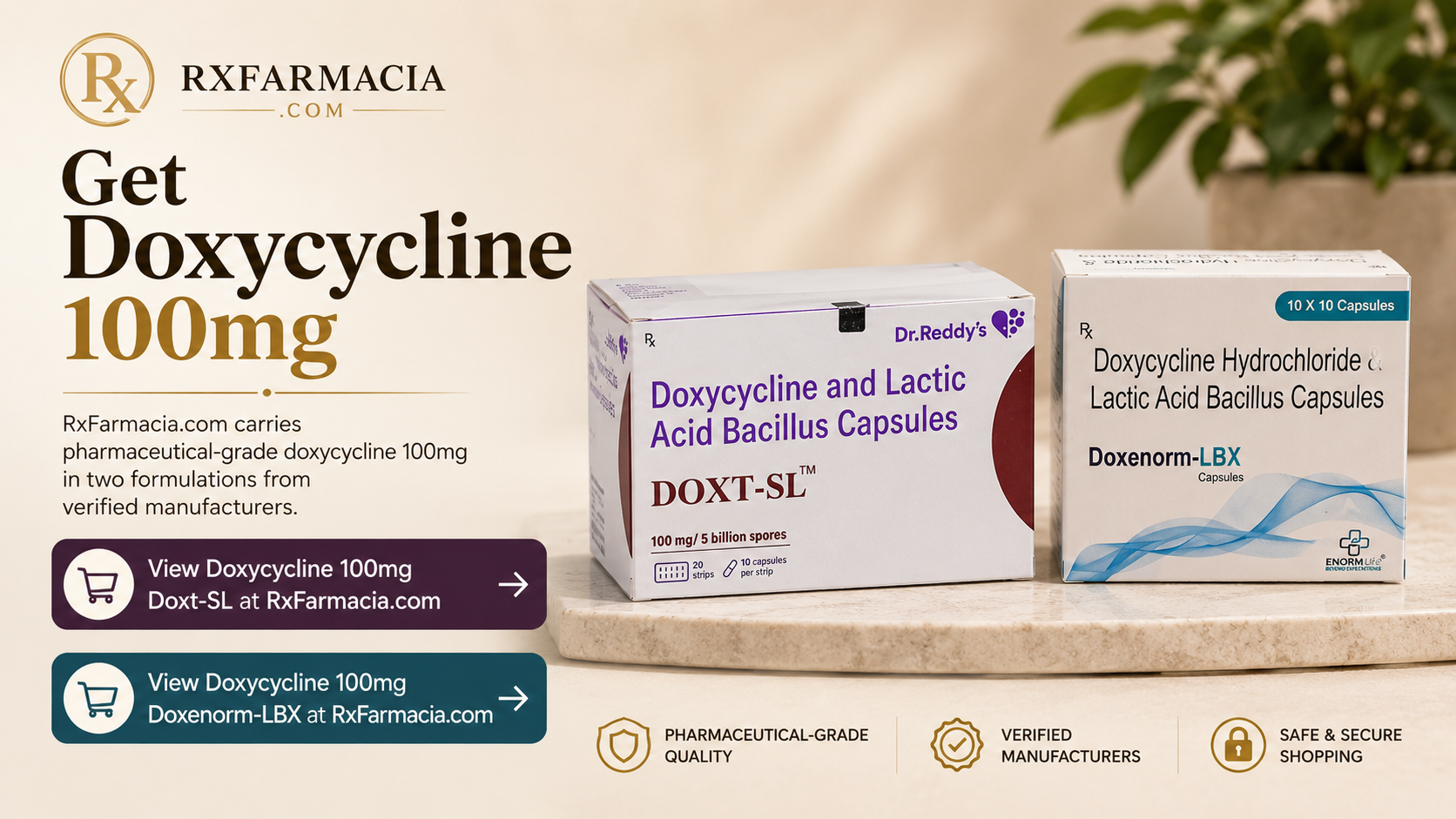
View Doxycycline 100mg Doxt-SL at RxFarmacia.com →
View Doxycycline 100mg Doxenorm-LBX at RxFarmacia.com →
Frequently Asked Questions
Will doxycycline treat an ear infection?
Generally, no. Doxycycline is not often first-line or usually recommended for treatment of otitis media (middle ear infection) and otitis externa (outer ear infection, swimmer’s ear). Otitis media is usually treated with amoxicillin. Otitis externa is usually treated with topical antibiotic drops. The one exception to this is malignant otitis externa, an uncommon but serious illness that may require systemic antibiotics (including doxycycline ) under specialised care.
Does doxycycline treat ear infections in adults?
The same guideline-based reasoning is valid for adults as for children, except for the paediatric concerns associated with age in dental and skeletal domains, which are express contraindications for the use of doxycycline in children under 8 years old. Amoxicillin-clavulanate is typically used to treat otitis media in adults. Otitis externa is usually treated topically. Doxycycline is not a first-line therapy indicated by guidelines for ear infections in adults (other than for malignant otitis externa).
Why doesn’t doxycycline work for ear infections?
Doxycycline does not reliably cover the most common causative bacteria of otitis media, Streptococcus pneumoniae, Haemophilus influenzae, and Moraxella catarrhalis, as do guideline-recommended antibiotics such as amoxicillin. Management of otitis externa differs: oral antibiotics such as doxycycline are not recommended as the infection is usually confined to the surface of the ear canal, and topical treatments can reach the infection more directly and effectively than systemic antibiotics distributed by the bloodstream.
Can I use leftover doxycycline for my ear infection?
This is not recommended. Clinical guidelines suggest that doxycycline is unlikely to be the right choice for either of the common types of ear infection. Using an inappropriate antibiotic may delay effective treatment, particularly for otitis externa, for which topical therapy is recommended over oral therapy. The more dependable thing to do is to go to a healthcare professional for an accurate diagnosis and adequate therapy.
Is there any situation where doxycycline is used for an ear infection?
Yes, one important and serious exception is malignant otitis externa, an unusual complication in which an infection of the outer ear extends beyond the ear canal into the neighbouring bone and tissue, primarily affecting immunocompromised or diabetic patients. Systemic antibiotics, which can include doxycycline, may be given as part of treatment by specialists on the basis of culture results. This condition is far more serious than a common ear infection.
The Bottom Line
Questions about doxycycline for ear infections typically get an answer that doesn’t answer what the person is asking. Current clinical guidelines do not recommend doxycycline as a first-line option for the treatment of ear infections (ie, otitis media, otitis externa). Amoxicillin is used to treat middle ear infections; antibiotic drops are used to treat outer ear infections for topical use, and doxycycline is used to treat the rare, serious complication of malignant otitis externa under medical care.
If you have a current earache, the right thing to do is to obtain a medical examination, not to use any antibiotic you might find in the medication cabinet. The right medication for the right kind of ear infection can clear it up faster than doxycycline ever could.
