

Blog
Doxycycline Side Effects After Stopping: What to Expect and What Is Actually Happening
Jun
You finished your round of doxycycline, but something doesn’t feel right. You may get acne again. You may have a peculiar upset in your stomach. You may see strange lumps on your chest that are not like your usual eruptions. These are the side effects of doxycycline that prescribers typically poorly explain with termination of the prescription.
In this post, we will try to explain which doxycycline side effects after stopping are expected and temporary, and which ones suggest certain problems that need care, and how to prevent the most important side effect before it happens.
The Key Distinction: Withdrawal vs Rebound
We need to have this distinction clear before we go over every single symptom to understand what’s happening to you.
Doxycycline does not produce physical dependence or a withdrawal syndrome on discontinuation. Doxycycline is not a controlled medication. It does not cause tolerance or physical dependence. Stopping suddenly does not cause the type of withdrawal experience seen with opioids, benzodiazepines, or alcohol. If that was what they were intending to accomplish, your doctor would urge you to quit it. No taper needed.
Doxycycline withdrawal causes rebound symptoms. The treatment was either killing the bacteria, the fungi, or the original infection, and when you stop the drug, the suppressed organism returns. This tendency is mechanistically unique from withdrawal and explains the specific doxycycline adverse effects pattern found in patients after discontinuation.
Rebound Acne: The Most Significant Doxycycline Side Effect After Stopping
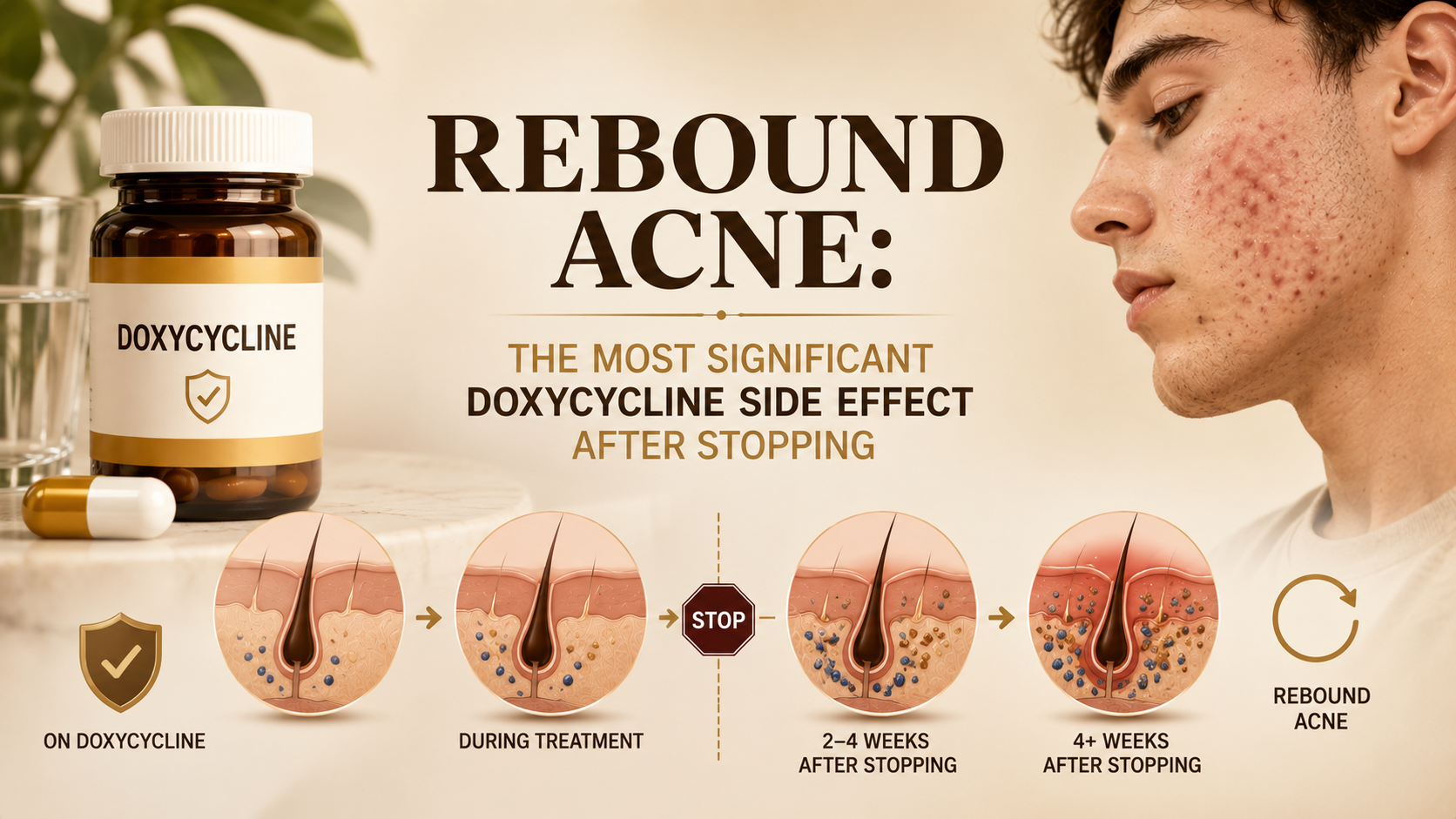
The main issue for the vast majority of patients who use doxycycline for acne is rebound acne once the drug is stopped. And it is the most preventable.
Doxycycline inhibits Cutibacterium acnes (previously Propionibacterium acnes), the predominant bacterium implicated in inflammatory acne, throughout the full course of medication. With appropriate doses of doxycycline, C. acnes populations are kept in check and the formation of inflammatory lesions is prevented. Those populations often start to recover within 2 to 4 weeks after doxycycline is stopped.
A 2024 study published in Clinical and Experimental Dermatology found that 6 to 12 weeks of antibiotic courses dramatically affect the cutaneous microbiome, reducing microbial diversity by as much as 40% in some patients. The organisms that first re-colonize after antibiotic treatment are often the hardiest; in the case of C. acnes this means that the strains that survived the course of antibiotics, including any antibiotic-resistant strains that arose during therapy, became the dominant population.
Clinical Outcome: Acne rebound after discontinuation of doxycycline may be equal to or worse than the baseline acne before treatment and may be less responsive to subsequent courses of doxycycline than the initial course.
How to Prevent Rebound Acne After Stopping Doxycycline
The evidence-based option is topical maintenance medication, which should be begun before stopping doxycycline, not after the reemergence of acne.
When discontinuing oral doxycycline, the standard of care in acne management consists of transitioning to a maintenance regimen that includes a topical retinoid (e.g., tretinoin or adapalene) and a topical benzoyl peroxide product. The retinoid acts on the follicular keratinization that leads to microcomedone formation, while benzoyl peroxide provides a constant antibacterial effect without creating antibiotic resistance.
Best timing: ask your provider if you can stop your doxycycline treatment, ask if you can start topical maintenance medication 4 to 6 weeks before the last dose, not the last day. This permits the topical regimen to be established before bacterial comeback.
For the complete guide on what tretinoin does and whether it is appropriate as a topical maintenance option, see Tretinoin before and after at Genixmeds.co.
Fungal Rebound: The Doxycycline Side Effect After Stopping Nobody Explains
This is a common side effect of doxycycline that is often overlooked and comes after you stop taking it. It affects a large percentage of people who get it while on or shortly after an antibiotic regimen and often don’t realise what it is.
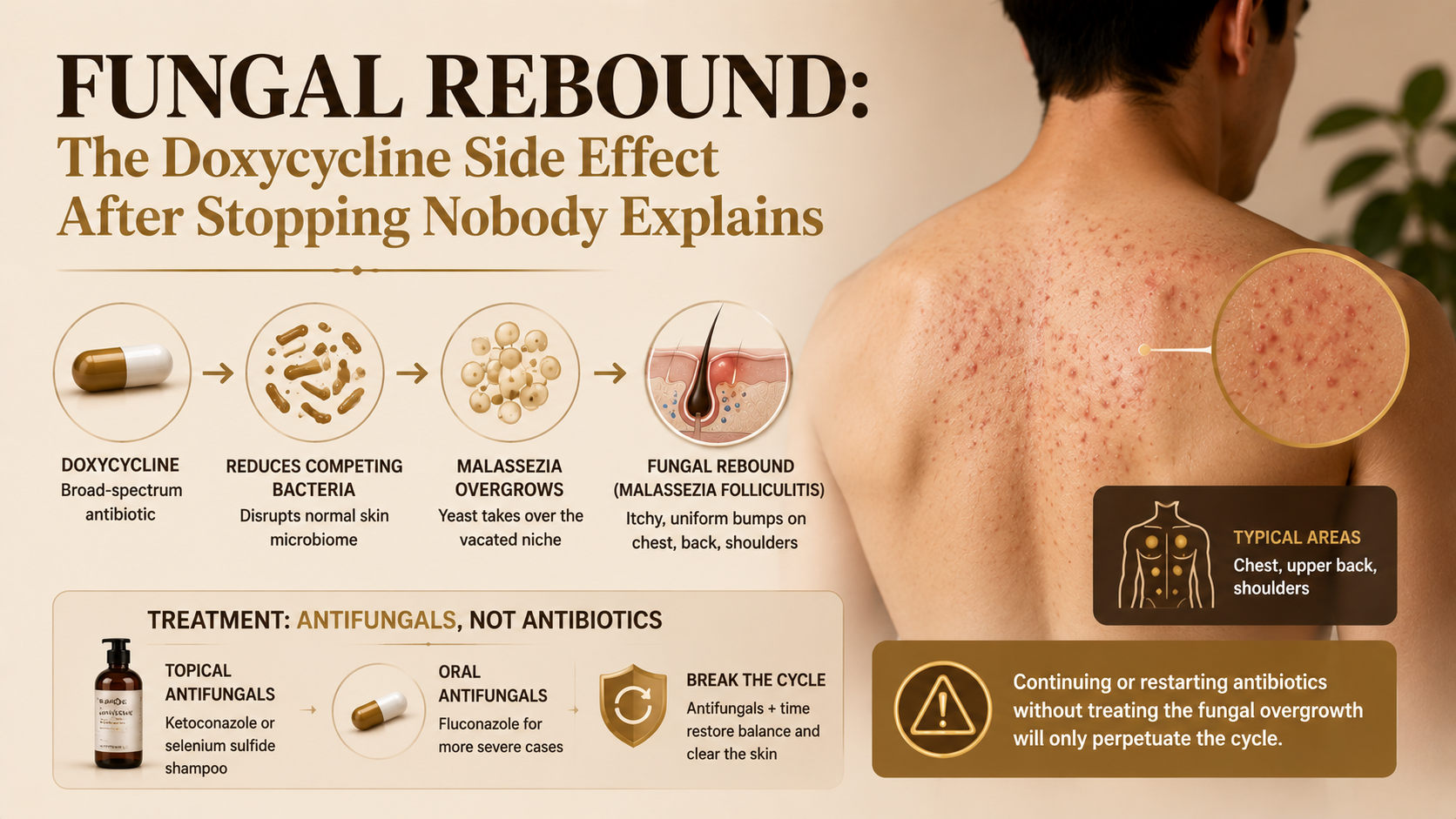
Malassezia is a yeast that lives on the skin of every person, especially on the upper body. Under normal conditions, it is controlled by competing bacteria. Doxycycline is a broad-spectrum antibiotic, and it reduces competing bacterial populations. In the absence of microorganisms, Malassezia has the ecological niche to grow in. This condition is called fungal rebound or Malassezia folliculitis.
Malassezia folliculitis is different from usual acne in that it is defined by small, homogeneous, pruritic papules localised over the chest, upper back, and shoulders. In contrast to common acne, which has multiple types of lesions, the lesions are very homogeneous in size and appearance. Pruritus is common. Distinctive is the distribution on the trunk.
If you developed this pattern of small, itchy, similar-looking bumps on your chest or back while on doxycycline or after, then no other antibiotics will help. Antifungals are used to treat Malassezia folliculitis. Topical preparations such as ketoconazole or selenium sulphide shampoo can be applied to the affected areas. In more severe cases, oral fluconazole can be used. “If you continue or restart antibiotics without addressing the fungal aspect, you’re just perpetuating the cycle.
Gut Microbiome Recovery
Gastrointestinal difficulties are common after stopping doxycycline and usually resolve on their own. Doxycycline affects gut flora while being taken, and following the termination of antibiotic use, the gut microbiome starts to recover, with temporary effects.
A peer-reviewed in vitro study published in a PMC journal looking at the effects of tetracyclines on colonic microbiota found that doxycycline caused an approximately 7% decrease in Lactobacillaceae and Bacteroidaceae (protective, beneficial families) and a greater than 10% increase in Enterobacteriaceae (a family containing pathogenic strains). The model also indicated that the decrease in microbial variety caused by doxycycline was not reversible when the antibiotic was discontinued, leading to concerns about the long-term consequences for the microbiome following many treatments.
The practical side effects of stopping doxycycline in the gut are temporary bloating, gas, changes in bowel habits (loose stools or changes in frequency), and moderate cramps as the microbiota readjusts. They often resolve within two to four weeks following discontinuation. Foods or supplements containing probiotics may be helpful during this phase of healing.
Photosensitivity After Stopping
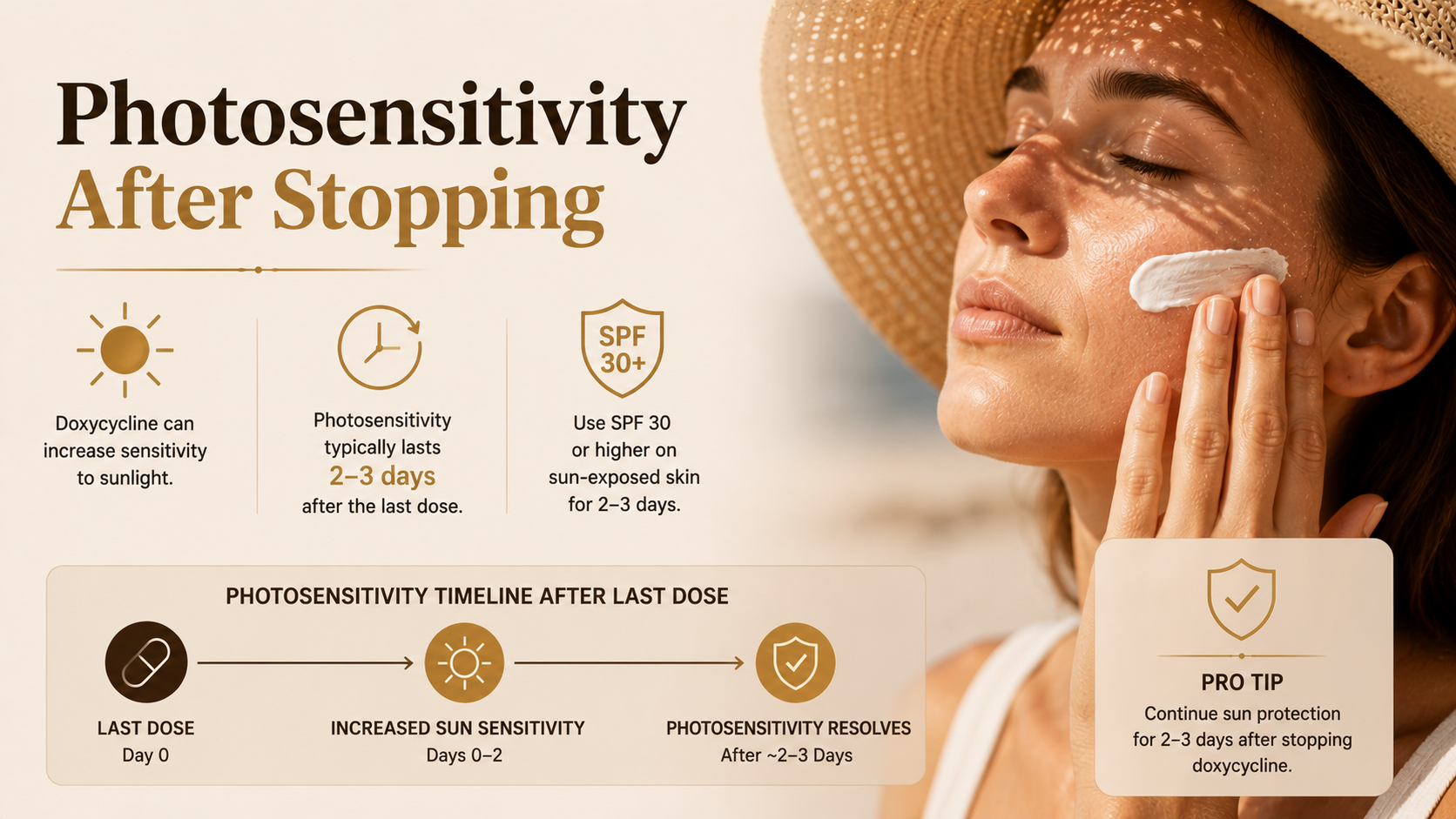
Photosensitivity is a known side effect of doxycycline therapy. This side effect is one of the most immediately relieved after stopping doxycycline.
The photosensitizing action of doxycycline lasts for around 2 to 3 days after the last dose, corresponding to the removal of the drug from the body. It is recommended to continue use of SPF 30 or higher on sun-exposed skin during this 2 to 3 day interval.
For the complete timeline of how long doxycycline persists in the body across different tissues, including the specific 48-hour alcohol wait time and other post-course guidance, see the How Long Does Doxycycline Stay in Your System guide at RxFarmacia.
Return of the Original Infection
One specific negative impact of stopping doxycycline (not connected to microbiome alteration) is that the initial sickness may come back if the period of treatment was not adequate to eradicate it.
Doxycycline is bacteriostatic, meaning that it stops germs from multiplying but doesn’t kill bacteria. The immune system is responsible for clearing the sickness, and doxycycline controls the bacterial population. If the treatment period was not long enough, the infection may not have been entirely destroyed at the end of dosing, or the immune response may have been insufficient for some other cause, resulting in the reappearance of the initial infection symptoms within days to 1 to 2 weeks after stopping.
This adds to a new infection and to the microbiome-associated adverse effects of doxycycline after stopping. If you have completed a course of treatment for a particular infection (other than acne) and your symptoms come back within 1-2 weeks, visit your doctor. You may need to have a repeat course of treatment, a different antibiotic or further tests.
Complete Reference: Doxycycline Side Effects After Stopping
Get Doxycycline 100mg at RxFarmacia.com
RxFarmacia.com carries pharmaceutical-grade doxycycline 100mg in two formulations from verified manufacturers.
View Doxycycline 100mg Doxt-SL at RxFarmacia.com →
View Doxycycline 100mg Doxenorm-LBX at RxFarmacia.com →
Frequently Asked Questions
What are the side effects of stopping doxycycline?
Rebound acne (in those who took doxycycline for acne) is the most serious side effect of stopping doxycycline. Temporary GI upset as the gut microbiome recovers. Fungal rebound: pruritic, uniform papules on the chest and back. Photosensitivity: disappears in 2 to 3 days. Vaginal yeast infection can also arise during or after stopping. These do not represent a pharmacologic withdrawal picture. Doxycycline is non-addictive and does not produce a physical dependence syndrome.
Does doxycycline cause withdrawal?
Pharmacologically, no. Doxy withdrawal doesn’t exist. Doxycycline is not a controlled substance and does not cause physical dependence. Doxycycline discontinuation does not induce withdrawal syndrome. The side effects commonly linked to withdrawal of doxycycline are rebound effects, ie, the reappearance of illnesses that the drug was controlling, mainly acne, rather than pharmacological withdrawal symptoms.
Will my acne come back after stopping doxycycline?
Without topical maintenance medication, there is a substantial risk of acne relapse after discontinuation of doxycycline. The drug suppresses C. acnes bacteria during therapy, but the bacterial population often rebounds within 2 to 4 weeks when doxycycline is stopped. The most effective prevention is to switch to topical maintenance (retinoid with benzoyl peroxide) prior to finishing the doxycycline, not after the acne recurs.
How long do side effects last after stopping doxycycline?
The answer is dependent upon the adverse impact of doxycycline you have after you stop taking it. Photosensitivity disappears in 2-3 days. Gastrointestinal problems tend to resolve within 2 to 4 weeks. Rebound acne can take weeks to appear and requires careful control with topical agents to avoid it. Fungal rebound does not occur spontaneously without intervention and requires tailored antifungal medication.
Can stopping doxycycline cause acne?
Yes, for doxycycline acne patients. If you stop taking doxycycline, the antibacterial effect on the bacteria C. acnes will stop. As the bacteria grow, the inflammatory acne lesions reappear, usually in 2 to 4 weeks. One of the most common adverse effects of doxycycline experienced by patients after discontinuation is the clinical justification for dermatological guidelines that recommend switching to topical maintenance before quitting oral antibiotics for acne.
Is there a withdrawal from doxycycline?
No. Doxycycline does not have pharmacological withdrawal effects. It is an antibiotic, not a restricted substance, and it is not addictive. People experience adverse effects with doxycycline after stopping, as rebound effects from the problems the medicine was treating, not a withdrawal syndrome. Discontinuing doxycycline does not require a tapering programme.
The Bottom Line
The negative effects of doxycycline after cessation are real, although commonly misinterpreted by those who experience them. These are not retractions. They are rebound, and this is an important distinction since rebound has certain causes, manifestations, and therapies that withdrawal does not.
The most important side effect of stopping doxycycline is rebound acne, and it is also the most preventable. The evidence-based approach is to institute topical maintenance therapy prior to your final dose. The fungal reappearance of pruritic lesions on the chest and back is often misinterpreted as people tend to provide more antibiotics when antifungal treatment is needed. Alterations in gastrointestinal function and photosensitivity are transitory and self-limited.
A strategy is born from knowledge of the situation and its causes. You don’t have to passively accept any of the bad effects of stopping doxycycline.
