

Blog
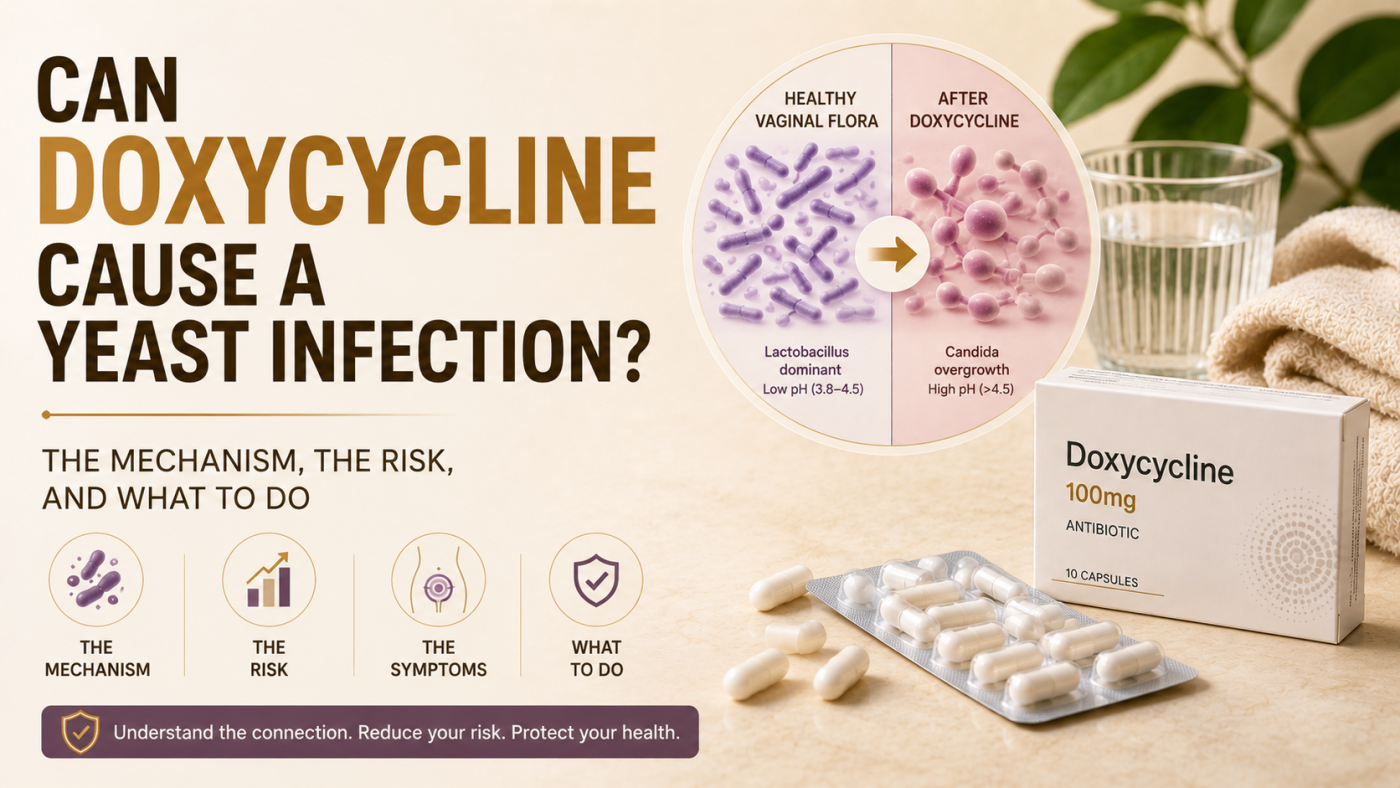
Can Doxycycline Cause a Yeast Infection? The Mechanism, the Risk, and What to Do
Jun
You have taken a course of doxycycline or are having treatment now, and you are experiencing a strange sensation: unease, pruritus, unusual discharge. You wonder whether the antibiotic is the culprit.
Chances are. This is the real explanation of the causes, the most susceptible people, and the real things you do without breaking your therapy.
The Direct Answer: Yes, and Here Is Why
Doxycycline can lead to yeast infections. This is not some remote side effect. You can find this in the FDA prescribing information for doxycycline, and it’s noted in the Mayo Clinic’s clinical medicine database and now borne out by large clinical trials.
The researchers presented data at the American College of Obstetricians and Gynaecologists Annual Clinical and Scientific Meeting in 2025, based on an assessment of computerised medical records of almost 139,000 females afflicted with acne who were taken oral antibiotics. The study found that doxycycline poses a significant risk of causing vulvovaginal candidiasis within six months of use. Doxycycline and azithromycin emerged as the antibiotics with the highest risk of vulvovaginal candidiasis (VVC) among the studied antibiotics, prompting the researchers to recommend that physicians be more cautious in prescribing these drugs to patients with a history of recurrent yeast infections.
This is the most recent large-scale clinical data about this question. This finding is consistent with clinical experience and known pharmacologic mechanisms.
How Doxycycline Disrupts the Vaginal Microbiome
In order to understand why doxycycline causes yeast infections, we need a little bit of background on the systems that normally control yeast growth.
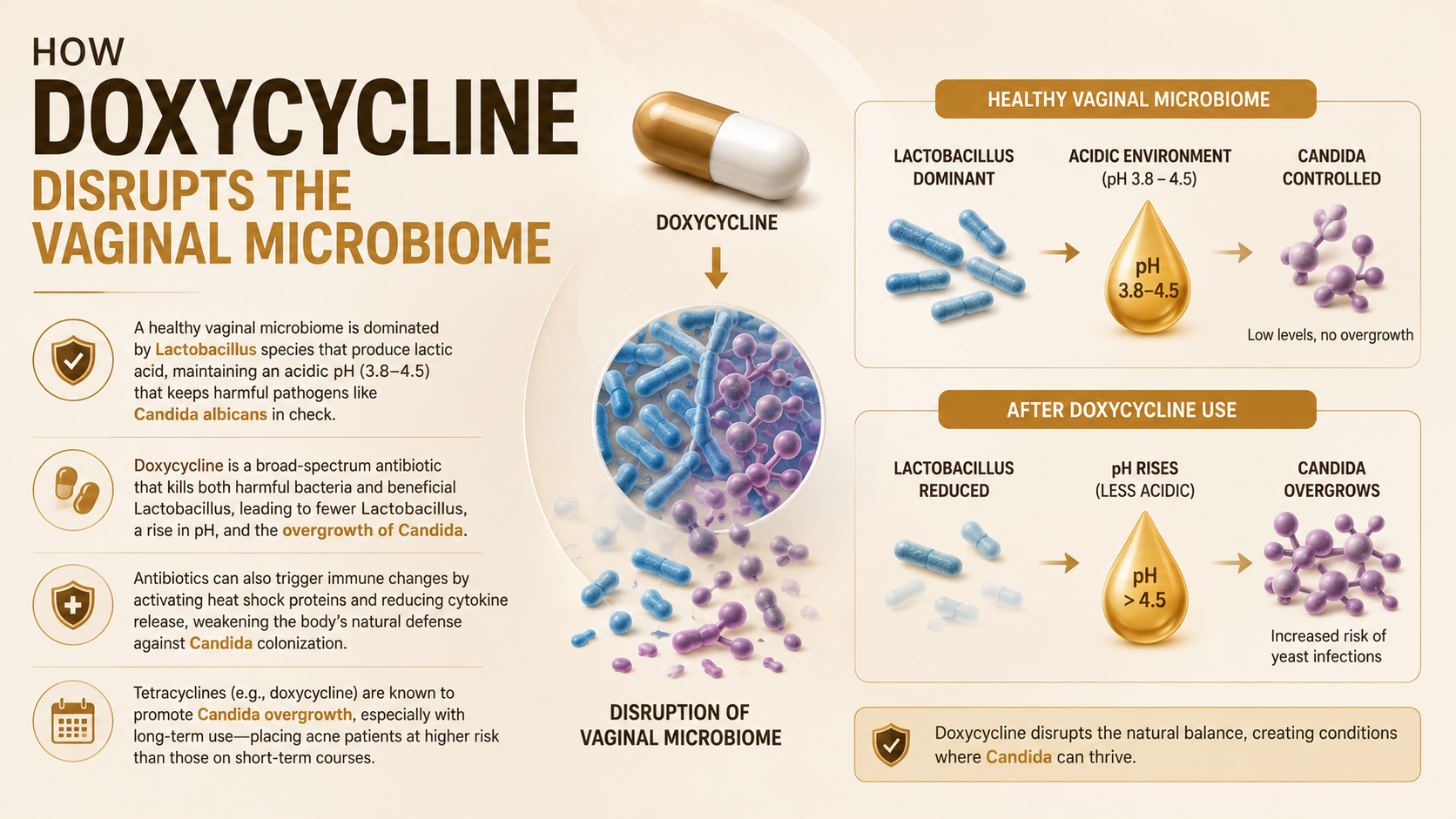
The healthy vaginal microbiome is mainly made up of Lactobacillus species, particularly Lactobacillus crispatus and Lactobacillus iners. These bacteria metabolise to produce lactic acid, keeping the vaginal pH between 3.8 and 4.5. The acidic environment is harmful to most pathogens, such as Candida albicans, the fungus that causes about 80-85% of vaginal yeast infections.
Candida is found in small concentrations in the vagina of about 20% of asymptomatic women. In most cases, it does not cause any problems as the acidic environment that Lactobacillus creates prevents it from multiplying.
Doxycycline is a broad-spectrum antibiotic. This means it kills a broad range of bacteria types, both the bad bacteria that are causing your infection and the beneficial Lactobacillus bacterium that prevents Candida from multiplying. Lactobacillus numbers drop, the vaginal pH rises, and Candida flourishes. The Candida had been regulated, but now has the conditions for unrestricted growth.
Another method has been uncovered in a recent study: antibiotics can alter the vaginal microbiome through the activation of heat shock proteins and by preventing the release of cytokines, the immune chemicals that generally keep Candida colonisation in check. It adds a new immunological method to the flora disruption process.
Tetracyclines ( e.g., doxycycline ) are specifically mentioned in clinical literature as promoting Candida overgrowth, especially in the long term. Women who are on doxycycline for a long time for acne are at a far higher risk than those who take a 7-day course for a respiratory infection.”
Who Is Most at Risk
Not everyone on doxycycline develops a yeast infection. Several factors significantly increase individual risk.
Symptoms: How to Know If It Is a Yeast Infection
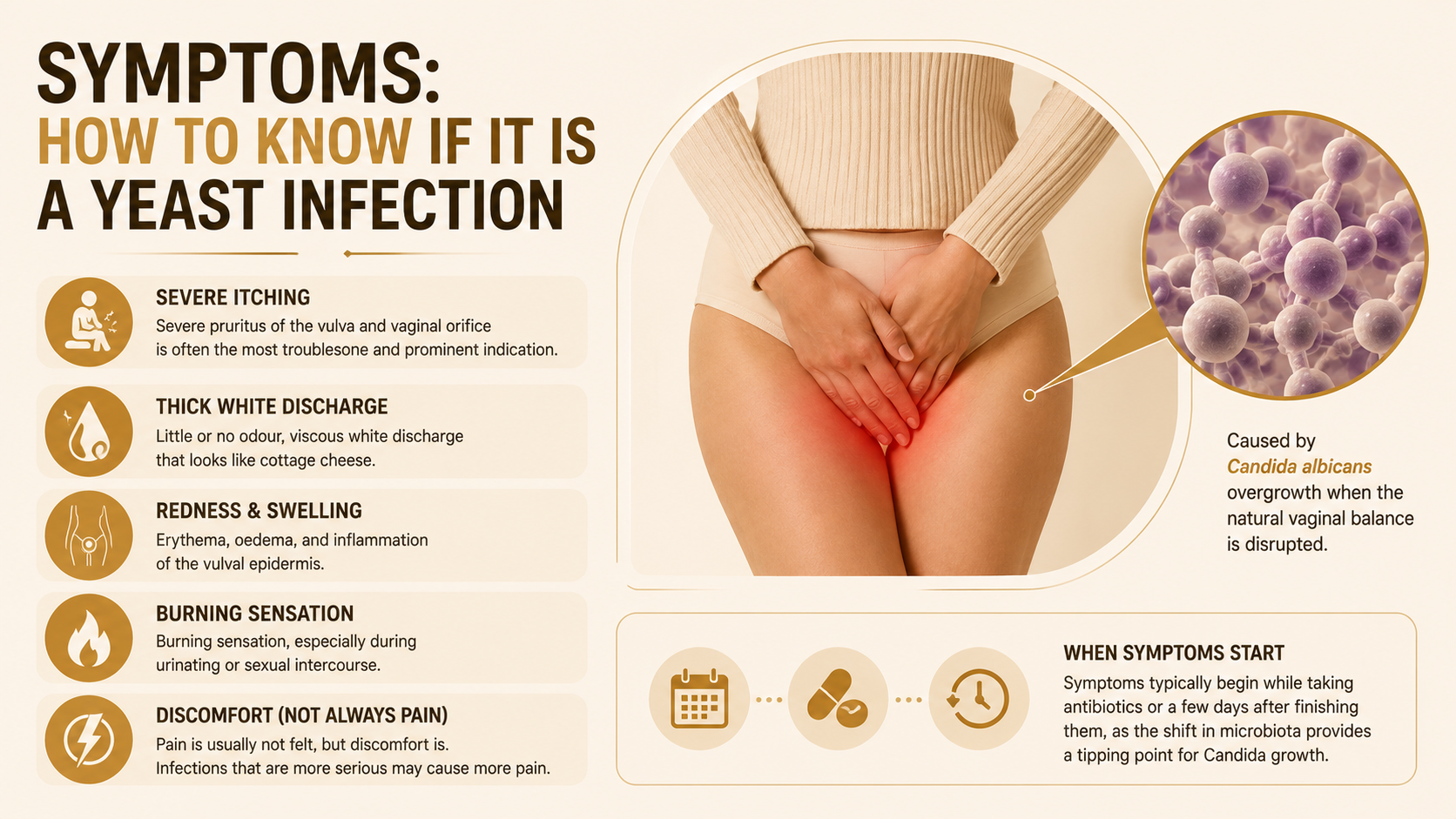
Symptoms of a vaginal yeast infection caused by Candida usually include:
- Severe pruritus of the vulva and vaginal orifice is often the most troublesome and prominent indication
- Little or no odour, viscous white discharge that looks like cottage cheese.
- Erythema, oedema, and inflammation of the vulval epidermis
- Burning sensation, especially during urinating or sexual intercourse
- Pain is usually not felt, but discomfort is. Infections that are more serious may cause more pain.
Symptoms typically begin while taking antibiotics or a few days after finishing them, as the shift in microbiota provides a tipping point for Candida growth.
Yeast Infection vs Bacterial Vaginosis: Why Telling Them Apart Matters
This distinction is commonly ignored in internet content and is important as the treatment is very different.
Doxycycline may disrupt the vaginal flora, causing yeast infections and bacterial vaginosis (BV). Bacterial vaginosis happens when there is a shift in the flora that allows other organisms, especially anaerobic bacteria like Gardnerella Vaginalis, to grow instead of Candida. Both are consequences of antibiotic-induced dysbiosis, yet they are different diseases.
How to Prevent a Yeast Infection on Doxycycline
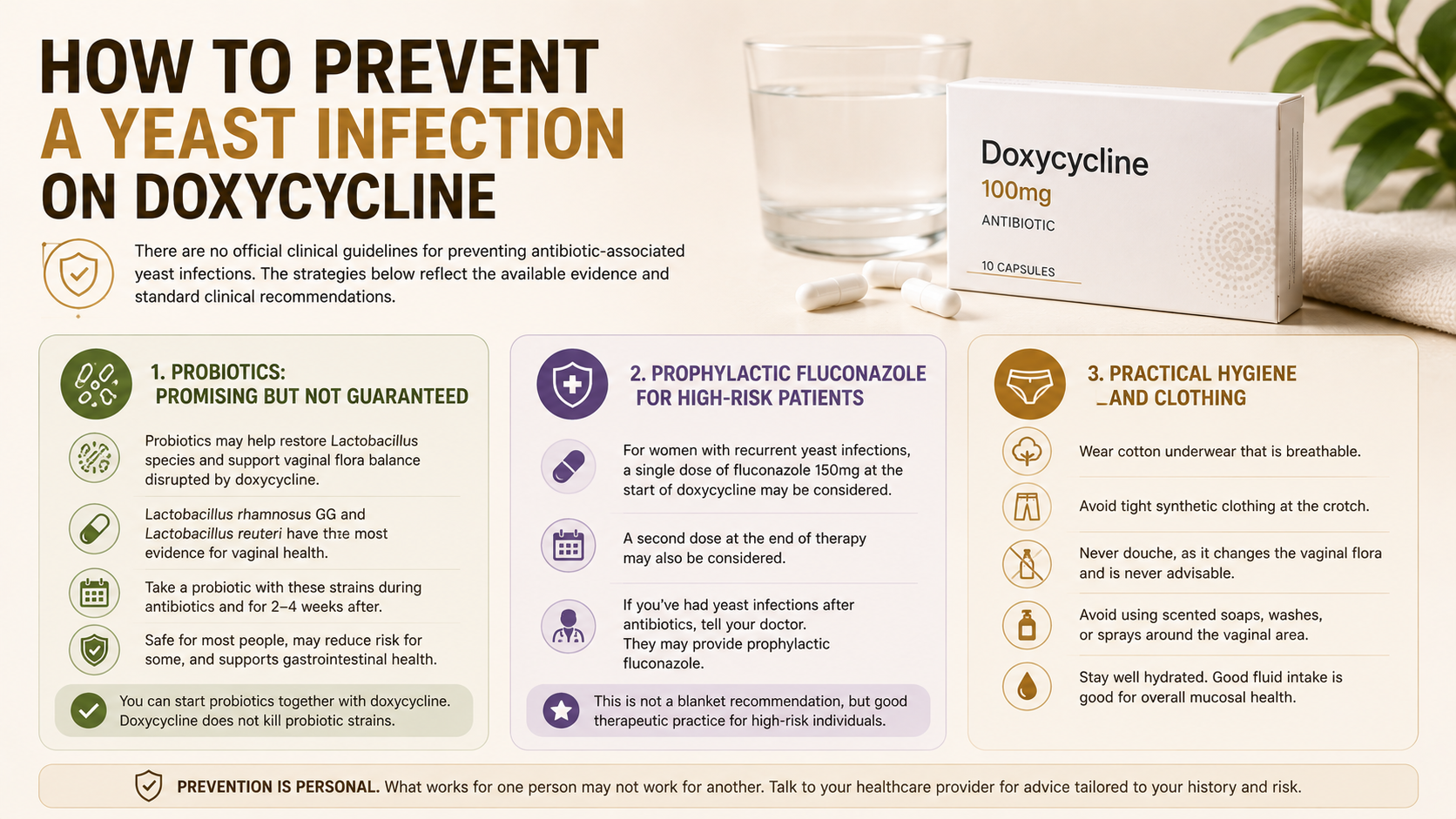
There are no official clinical guidelines for preventing antibiotic-associated yeast infections. The strategies below reflect the available evidence and standard clinical recommendations.
Probiotics: Promising but Not Guaranteed
It makes sense to give a probiotic together with doxycycline. By increasing Lactobacillus species, you may be helping to restore the balance of vaginal flora that doxycycline disrupts. The research is not conclusive, but it is encouraging for some breeds.
Lactobacillus rhamnosus GG and Lactobacillus reuteri have the most evidence for vaginal health uses. The most common recommendations are to take a probiotic with these strains during the course of antibiotics and for 2-4 weeks after. It’s unlikely to cause injury, it may reduce risk for some people, and it supports gastrointestinal health regardless of any vaginal effects.
It is fine to start probiotics together with doxycycline. Probiotic supplements contain strains of Lactobacillus that are different from the colonising bacteria, and hence, doxycycline does not kill probiotics in the same way as bacteria in the human gut.
Prophylactic Fluconazole for High-Risk Patients
For women with a documented history of recurrent yeast infections, clinicians might consider a single prophylactic dose of fluconazole 150mg at the commencement of doxycycline therapy and perhaps a second dose at the end. This is not a blanket recommendation, but good therapeutic practice for women who acquire yeast infections regularly when on antibiotics.
If you are prescribed doxycycline, tell your doctor if you have ever had yeast infections after antibiotics. They may provide prophylactic fluconazole.
Practical Hygiene and Clothing
- When you are taking doxycycline, wear cotton pants that are breathable.
- Avoid tight synthetic clothing at the crotch.
- Never douche, as it changes the vaginal flora and is never advisable.
- Avoid using scented soaps, washes, or sprays around the vaginal area.
- Stay well hydrated. Good fluid intake is good for overall mucosal health.
Treatment: What to Do If You Get a Yeast Infection
First rule: don’t stop the doxycycline. If the antibiotics are stopped early to treat the yeast infection, the original bacterial infection is not treated properly, and the chances of antibiotic resistance developing are greater. The yeast infection and the main infection have to be simultaneously treated and not sequentially.
If you have a history of yeast infections and can recognise the signs, you can self-treat a typical vaginal yeast infection with an over-the-counter antifungal medicine during or after a doxycycline treatment.
- The simplest first-line treatment is a single oral dose of fluconazole 150mg (Diflucan, Canesten oral, generic). It is given as a single dose and works systemically, with most people seeing significant relief of symptoms within 24 to 48 hours and complete remission within 5 to 7 days.
- Topical antifungals: Clotrimazole vaginal cream or pessaries (Canesten, Monistat-7, generic equivalents), Miconazole vaginal cream or pessaries (Monistat-3 or Monistat-1). Duration of treatment: 1 to 7 days, depending on formulation. Suitable for women who prefer topical treatment or who cannot take oral fluconazole.
- Both oral and topical forms are effective. The choice is based on personal preference, tolerance, and possible interaction with other medications influencing fluconazole.
See your doctor if symptoms are severe, or if they do not resolve within 7 days of antifungal treatment, or if they reappear quickly following treatment. Cultures may be used to identify the organism and to exclude non-albicans Candida spp or bacterial vaginosis.
Oral Thrush: The Other Yeast Infection Doxycycline Can Cause
Oral candidiasis (thrush) can be caused by doxycycline, but this is usually connected with vaginal yeast infections. Doxycycline changes the oral microbiota in much the same way as it changes the vaginal microbiome.
Signs of oral thrush include white patches on the tongue, inner cheeks, palate, or throat that may be accompanied by pain, loss of taste, or a cottony feeling in the mouth. It’s less common than a vaginal yeast infection from antibiotics, but it’s in the same group of people on broad-spectrum antibiotics, especially in high dosages and/or for long periods of time.
Oral thrush requires prescription antifungal therapy, either nystatin oral suspension (swish and swallow) or systemic fluconazole for more severe cases. Oral thrush is not treated with over-the-counter medicines for vaginal yeast infections. If you develop oral symptoms, contact your doctor.
Get Doxycycline 100mg at RxFarmacia.com
RxFarmacia.com carries pharmaceutical-grade doxycycline 100mg in two formulations, both from verified manufacturers.
View Doxycycline 100mg Doxt-SL at RxFarmacia.com →
View Doxycycline 100mg Doxenorm-LBX at RxFarmacia.com →

Frequently Asked Questions
Can doxycycline cause a yeast infection?
Yes. Doxycycline is a broad-spectrum antibiotic that kills pathogenic bacteria as well as the beneficial Lactobacillus species that inhibit Candida in the vaginal microbiome. When Lactobacillus numbers decrease, Candida might take over, resulting in a yeast infection. This is clearly indicated on the FDA prescribing label, and it was confirmed in a 2025 clinical trial of more than 139,000 women.
How common is a yeast infection from doxycycline?
Common enough to be considered as an expected hazard rather than an unusual, unpleasant occurrence. About 75 % of women will have a vaginal yeast infection at some point in their lives. Antibiotic use is one of the major triggers. Long-term use of doxycycline for acne is specifically cited in the literature as a risk factor for Candida overgrowth.
How do I know if I have a yeast infection or BV after doxycycline?
Yeast infection: intense external itching, thick white cottage cheese-like discharge, minimal smell, vulvar erythema, and swelling.
Bacterial vaginosis: Thin grey or white watery discharge, fishy odour (especially post intercourse), minor pruritus. The difference is significant as the therapies are different: antifungals for yeast infections and prescription metronidazole for bacterial vaginosis. Consult your prescriber if you are unsure.
Should I stop taking doxycycline if I get a yeast infection?
No. Don’t stop your course of antibiotics. Stopping medication too early may not adequately treat the primary bacterial disease and increase the risk of developing antibiotic resistance. Continue the doxycycline and treat the yeast infection with an antifungal at the same time. The two therapies are non-interfering.”
Can doxycycline cause a yeast infection in men?
Yes, but less often than in women. Antibiotics can upset the usual flora and lead to penile candidiasis in men, who will develop erythema, pruritus, or a rash on the glans or foreskin. Oral thrush from doxycycline can happen to people of either sex. The mechanism of vaginal yeast infections does not apply to men; other types of Candida overgrowth can happen.
Do probiotics prevent yeast infections from doxycycline?
The evidence is suggestive but not conclusive. Lactobacillus rhamnosus GG and Lactobacillus reuteri have the most evidence for supporting vaginal health. The most common preventative approach recommended is to give a probiotic with these strains during the course of the antibiotic, and 2 to 4 weeks after. It’s safe, it may cut risk, and it’s worth thinking about, especially if you’re a woman who has had to deal with antibiotic-induced yeast infections.
How long after doxycycline can a yeast infection develop?
Symptoms can occur throughout the course of the antibiotic, generally within a few days of starting therapy, or within days to weeks after completion of treatment. The ACOG 2025 study followed outcomes for up to 6 months after treatment and found that doxycycline was associated with a significantly increased risk of vulvovaginal candidiasis across the entire follow-up period. The symptoms of a yeast infection will most typically occur during or after the treatment phase, within the first 1-2 weeks.
The Bottom Line
Doxycycline can cause yeast infections. This is supported by comprehensive clinical evidence and proven pharmacological knowledge from 2025. The mechanism is simple: Doxycycline, a broad-spectrum antibacterial agent, diminishes the protective Lactobacillus flora in the vagina, which normally prevents overgrowth of Candida.
The pragmatic approach is obvious: do not stop the antibiotic, treat the yeast infection with an over-the-counter antifungal, consider probiotics during and after any doxycycline course, and know the difference between yeast infection and bacterial vaginosis symptoms before choosing an OTC medication. If you are unsure about a particular situation, it is better and safer to call the prescriber as soon as possible than to guess.
